
Faith, Folk, and Freedom: How India’s Sindhu Darshan Festival is Weaponizing Culture to Crush Drug Abuse
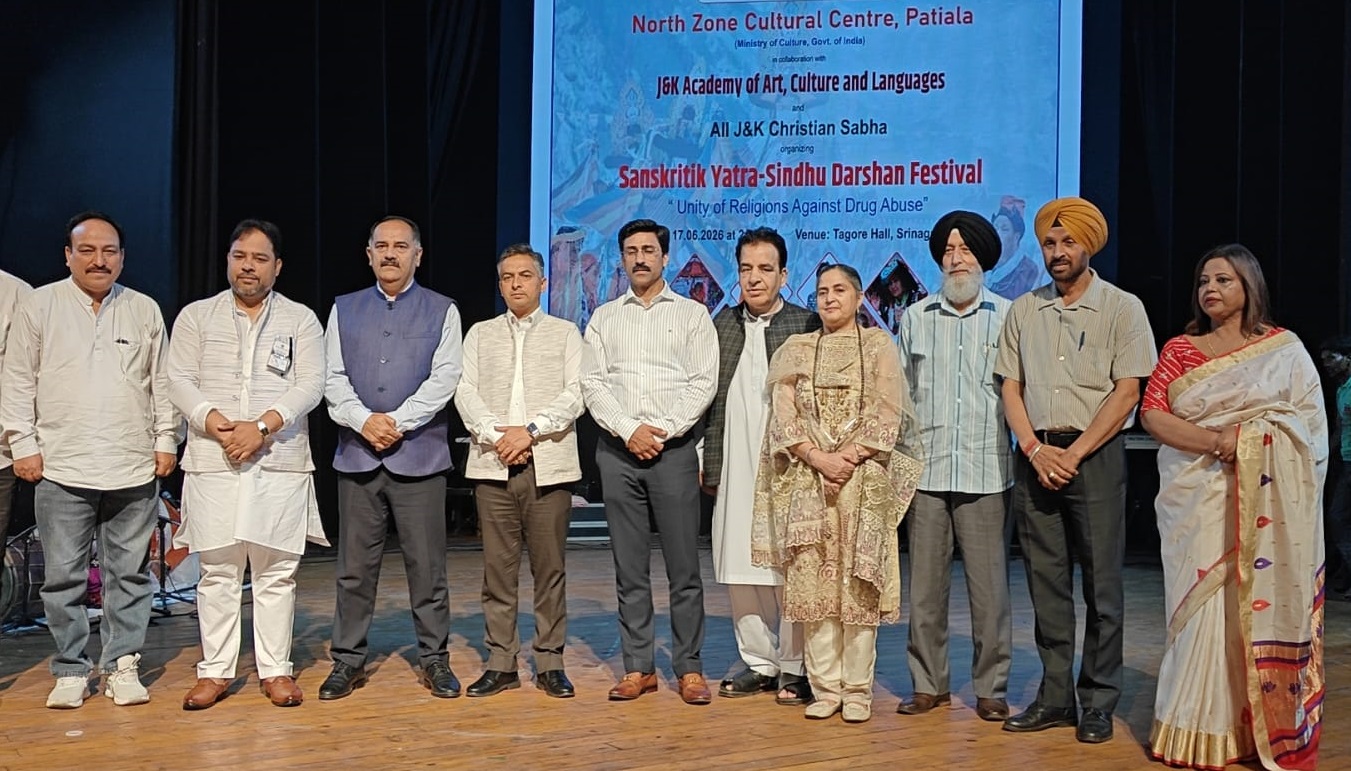
SRINAGAR, JUNE 17, 2026: In a powerful alliance of heritage and social activism, the Jammu & Kashmir Academy of Art, Culture and Languages (JKAACL), alongside the North Zone Cultural Centre (NZCC), Patiala, and the All J&K Christian Sabha, launched the vibrant Sanskritik Yatra 2026–Sindhu Darshan Festival at Tagore Hall, Srinagar. The high-profile event drew a diverse crowd of artists, religious leaders, students, and citizens, all gathered under a unified banner to celebrate India’s rich cultural tapestry while spearheading a massive campaign against the region’s growing drug crisis. The event was attended by prominent figures, including MLA Lal Chowk, Sheikh Ahsan Ahmed Pardesi, who served as the chief guest; MLA Ramnagar, Sunil Bhardwaj, who attended as the guest of honour; and Principal Secretary of Culture, Brij Mohan Sharma, who joined as a special guest.
Opening the event, Secretary JKAACL Harvinder Kour emphasized that cross-regional cultural exchange programs are vital for cementing national integration and keeping India’s artistic legacy alive. She noted that festivals like Sindhu Darshan offer a critical platform for artists from various backgrounds to collaborate and champion the timeless spirit of “Unity in Diversity.” Echoing these sentiments, Sheikh Ahsan Ahmed Pardesi praised the organizers for seamlessly blending a celebration of the arts with an urgent social call to action. Pardesi remarked that art and language act as crucial bridges over ideological divides, reinforcing mutual respect and harmony. Turning his focus to the festival’s core theme, he voiced deep concern over the rising tide of substance abuse among youth, urging the younger generation to redirect their potential into education, sports, and community service. He emphasized that safeguarding young minds from addiction is a shared societal duty requiring the active involvement of parents, teachers, and religious institutions.
Furthering the call to action, Sunil Bhardwaj highlighted the profound impact of the festival’s central message, “Unity of Religions Against Drug Abuse,” noting its synergy with Jammu and Kashmir’s ongoing 100-Day Nasha Mukt Abhiyan. Bhardwaj stressed that the vision of a progressive, “Viksit Bharat” relies entirely on maintaining a healthy, empowered youth population, positions which art and culture are uniquely suited to advocate for. This sentiment was strongly backed by a panel of interfaith leaders who spoke on the collective moral responsibility of families and communities to instill strong ethical values in children to prevent addiction. The festival concluded with an explosive series of traditional dances that electrified the audience, featuring Manipur’s Lai Harobba, Gujarat’s Dandia Raas, Maharashtra’s Lavni, Kashmir’s own Dhamali folk dance, Odisha’s Goti Pua, Rajasthan’s Kalbelia, and Punjab’s Bhangra, topped off with a soulful, spiritual performance by renowned Sufi singer Manak Ali.