
North East India Achieves Massive Expansion in Scientific Infrastructure and Startup Avenues Says Dr Singh
SHILLONG, July 14, 2026 — Union Minister Jitendra Singh Posted on X that the North Eastern Region has witnessed an unprecedented expansion of scientific infrastructure over the last decade, effectively correcting decades of past neglect despite the area’s strategic importance and unique geographical challenges.
To highlight this shift, the minister noted that the entire region possessed only two weather radars before 2014, including just one in Meghalaya despite its town Cherrapunji recording the world’s highest rainfall. Today, that number has grown to 13 active weather radars across the territory.In addition to meteorology upgrades, the network of seismological observatories has expanded significantly from 84 stations before 2014 to 171 operating at present.
The region has also introduced specialized lightning detection stations in Meghalaya and Tripura, a critical safety asset that did not exist in the area previously. These technical advancements are part of a broader federal push to modernize monitoring systems and better protect local communities from severe weather conditions and seismic activities common to the hilly terrain.
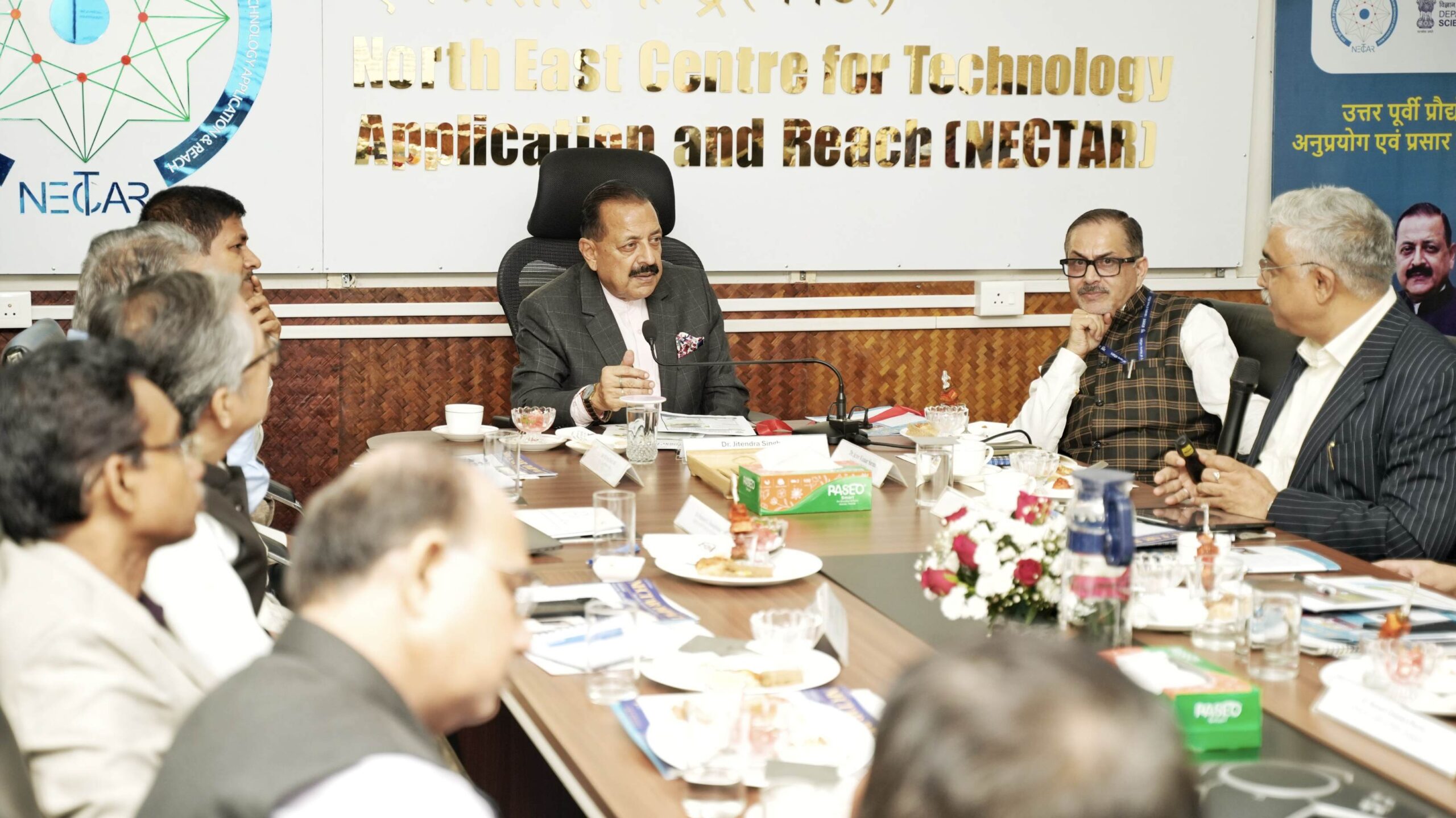
Furthermore, substantial efforts have been directed toward mainstreaming the region by actively introducing local youth and students to the country’s booming startup ecosystem. The North East Centre for Technology Application and Research has launched a STEM Education initiative that promotes experiential learning through robotics, coding, artificial intelligence, and 3D printing.
Developed in collaboration with IIT Kanpur, the program has successfully set up STEM laboratories across five North Eastern states, benefiting more than 25,000 students living in remote and interior areas.