
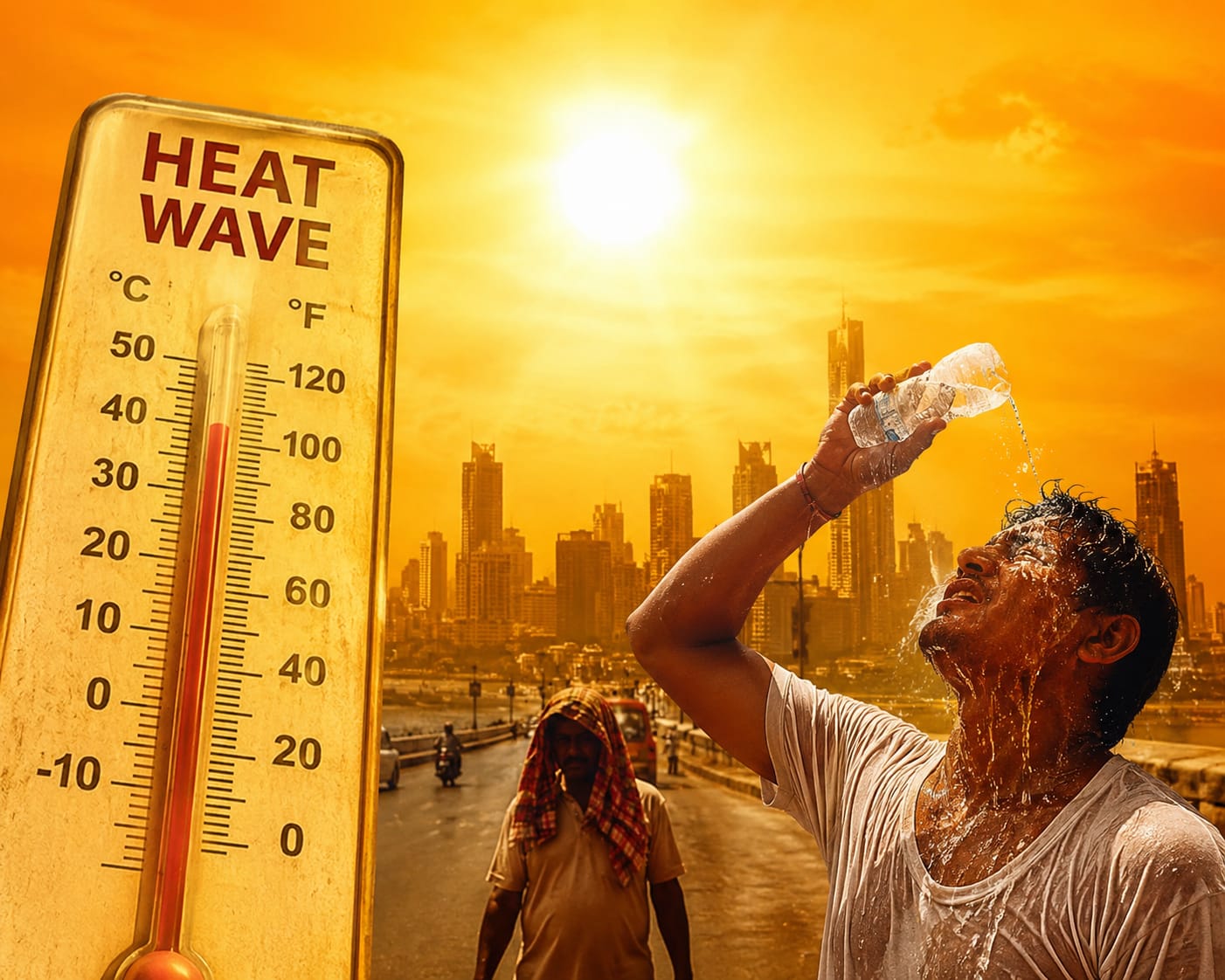
IMD forecasts below normal rainfall and above normal heatwave days for June 2026
NEW DELHI, May 29, 2026 – The India Meteorological Department has released its updated long-range forecast for the 2026 southwest monsoon season alongside the monthly weather outlook for June.
Utilizing its advanced Multi-Model Ensemble forecasting system, the meteorological department announced that the overall seasonal rainfall between June and September is expected to be below normal, quantitatively estimated at 90% of the Long Period Average with a model error margin of 4%.
The latest climate models indicate a strong 84% probability of the country experiencing below-normal or deficient rainfall as neutral El Nino-Southern Oscillation conditions over the equatorial Pacific region transition toward El Nino conditions during the monsoon period.
Meanwhile, neutral Indian Ocean Dipole conditions are projected to persist throughout the season.Regionally, below-normal seasonal rainfall is predicted across most parts of the country for the entire four-month period.
The only exceptions include specific pockets within Northwest and Northeast India, eastern parts of peninsular India, and adjoining areas of east-central India, where normal to above-normal precipitation is anticipated.
For the month of June specifically, the average national rainfall is projected to fall below 92% of its long period average of 165.4 centimeters. This anticipated moisture deficit has prompted officials to highlight potential challenges for agricultural planning, water resource management, hydropower generation, and ecosystem sustainability, emphasizing the critical need for early drought monitoring and proactive water conservation strategies.
In addition to suppressed rainfall, June 2026 is expected to bring harsher thermal conditions with above-normal monthly maximum and minimum temperatures projected for a majority of the nation.
The meteorological department issued a heatwave outlook warning of above-normal heatwave days across major portions of Uttar Pradesh, Haryana, Punjab, Bihar, Odisha, Chhattisgarh, Gujarat, and Andhra Pradesh, with isolated occurrences tracking into Maharashtra, Telangana, Himachal Pradesh, and Tamil Nadu. Conversely, Rajasthan and Jharkhand are expected to experience below-normal heatwave frequencies.
In light of the severe health and infrastructural risks posed by prolonged extreme heat, state and district administrations have been advised to activate emergency response mechanisms, establish operational cooling shelters, and ensure adequate drinking water availability, while the general public is urged to follow hydration protocols and minimize peak-hour exposure.