
LG Manoj Sinha Urges IRMS Trainees to Lead Indian Railways Transformation as Driving Force of Economic Growth and National Unity
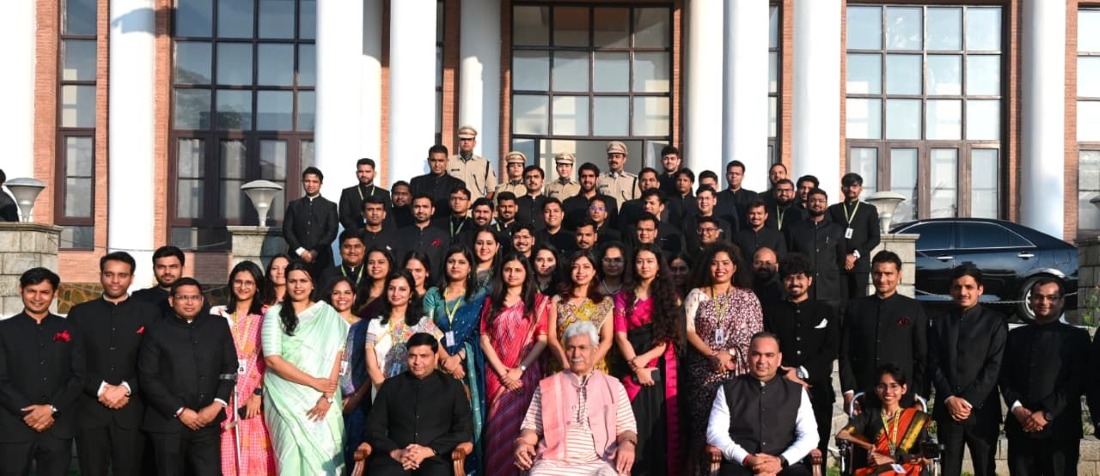
SRINAGAR, AUGUST 04 — Addressing a cohort of probationary officers from the Indian Railways Institute of Transport Management (IRITM), Lucknow, Lieutenant Governor Manoj Sinha emphasized the critical role young railway administrators play in steering the rapid modernization and economic integration of the nation. Interacting with 69 officer trainees from the 2022, 2023, and 2024 Civil Services examination batches currently on a field study tour in Jammu and Kashmir, Sinha highlighted that Indian Railways has evolved beyond a traditional passenger transport system into a primary engine for logistics efficiency, industrial competitiveness, and national cohesion.
Sinha commended the rich diversity of the trainees, who represent a wide cross-section of academic disciplines—including engineering, medicine, law, science, and the humanities—and hail from over a dozen states and union territories. He noted that this vast geographical and educational variety reflects the core identity of the nation, turning training institutes like IRITM into vital platforms for fostering national unity. Describing the officers as the torchbearers of the country’s developing capabilities and resolve, he urged them to approach their administrative duties with both strategic vision and human sensitivity.
Reflecting on the structural shifts in the railway network over the past decade under Prime Minister Narendra Modi’s leadership, the Lieutenant Governor underscored major milestones defining this current phase of development. These achievements include record-setting railway track electrification, the rapid expansion of Dedicated Freight Corridors, the upcoming completion of the rail link connecting Kashmir directly to Kanyakumari, the rollout of high-speed Vande Bharat express trains, and the widespread redevelopment of passenger infrastructure under the Amrit Bharat Station Scheme.
In his message to the future managers of the Indian Railway Management Service (IRMS), Indian Railway Protection Force Service (IRPFS), and Accounts service, Sinha stressed that efficiency in logistics directly affects the national economy. He observed that reducing transit times directly lowers supply chain costs, enhances domestic manufacturing competitiveness, and elevates the global standing of the country. To guide their professional careers, he outlined three core operational pillars: leveraging modern digital tools, artificial intelligence, and data analytics for continuous innovation; adopting a citizen-centric, empathetic approach to public service; and maintaining unwavering integrity and transparency as custodians of massive public infrastructure investments.
Concluding his address, Sinha reminded the trainees that their strategic decisions and leadership over the coming decades will actively support the vision of turning India into a fully developed nation by 2047. He encouraged the young officers to commit to dedicated public service, balancing strict administrative discipline with an unyielding focus on safety, financial accountability, and passenger welfare. Course Director and Professor Rahul, along with senior faculty members and officials from the Lucknow-based institute, were also present during the interaction.