
University of Jammu Hosts Seminar on Advanced In Vitro and In Vivo Imaging Technologies
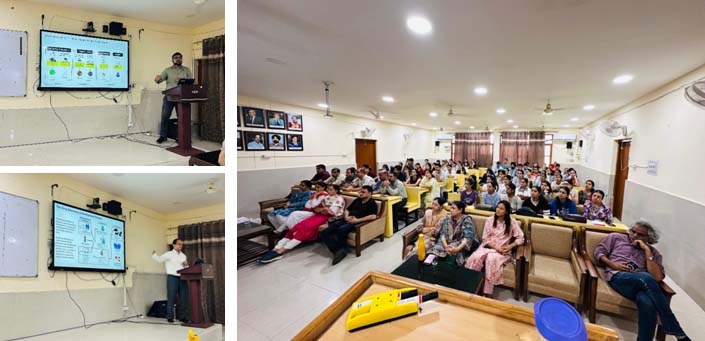
JAMMU, August 5, 2026 — The University Science Instrumentation Centre (USIC) at the University of Jammu organized a scientific seminar titled “Advanced In Vitro and In Vivo Imaging Systems” at the Seminar Hall of the Department of Zoology. Conducted under the theme “From Cells to Whole Animal: Integrated Imaging Solutions,” the event gathered faculty members, researchers, and students to explore cutting-edge imaging technologies driving modern biomedical research, preclinical investigations, and drug discovery.
The seminar offered an in-depth examination of advanced imaging platforms developed by Revvity Inc., highlighting how integrated solutions allow scientists to observe biological processes seamlessly across various organizational scales—ranging from single cells and isolated tissues to full animal models. Throughout the sessions, speakers underscored the crucial synergy between analytical platforms, specialized reagents, and advanced instrumentation in creating efficient, reproducible research workflows.
A central focus of the technical presentations was an integrated experimental pipeline encompassing sample preparation and automation, DNA and protein characterization, automated cellular analysis, high-content screening, quantitative detection, and in vivo imaging. Experts highlighted that bridging high-resolution cellular imaging with sensitive, non-invasive whole-animal imaging equips researchers to extract holistic, quantitative, and biologically relevant datasets within a unified research framework.
The scientific deliberations covered a wide range of state-of-the-art techniques, including two-dimensional and three-dimensional optical imaging, live-cell tracking, fluorescence, bioluminescence, high-content cellular analysis, and automated quantitative data processing. Presenters emphasized the growing role of multiparametric datasets in driving deeper biological discoveries and elevating the overall reproducibility of experimental outcomes.
Special emphasis was placed on applying these advanced imaging workflows to key domain areas, including oncology, pharmacology, infectious disease research, therapeutic evaluation, and target validation. The discussions illustrated how an integrated technological framework supports scientific inquiry from early-stage discovery through preclinical evaluation.
Among the prominent systems showcased was the IVIS In Vivo Imaging System, known for its high sensitivity in non-invasive longitudinal tracking within experimental animal models. By enabling non-invasive monitoring of disease progression, therapeutic efficacy, and biological responses over time, the system allows researchers to study the same model repeatedly. This approach significantly minimizes biological variability, improves the quality of research data, and aligns with ethical standards by reducing and refining animal usage in research. Additionally, High-Content Screening systems were featured for their capacity to combine automated microscopy with robust analytical tools, delivering high-throughput, reproducible cellular data.
The seminar featured insights from key industry experts at Revvity Inc. (India and South Asia), including Regional Manager Vishal Gupta, Senior Regional Sales Manager Siddharth Kapri, and Senior Business Development Manager-Imaging Shahzada Asad. Drawing on over 15 years of experience in cellular and animal imaging, Asad detailed the strategic implementation of live-cell imaging, high-content screening, and non-invasive in vivo platforms in contemporary life sciences and pharmaceutical studies.
The interactive nature of the presentations prompted dynamic discussions among attendees, offering researchers and students across zoology, biotechnology, cell biology, oncology, and pharmacology exposure to transformative analytical techniques. The event concluded with participation from academic leadership and researchers, including the Head of the Department of Zoology, Head of the Department of Botany, Director of the School of Biotechnology, Director of USIC, and faculty and research scholars from across the University of Jammu’s life sciences departments.