
JKLCMA Vice Chairman Inspects Brari Nambal and Khushalsar Lakes to Accelerate Restoration Efforts
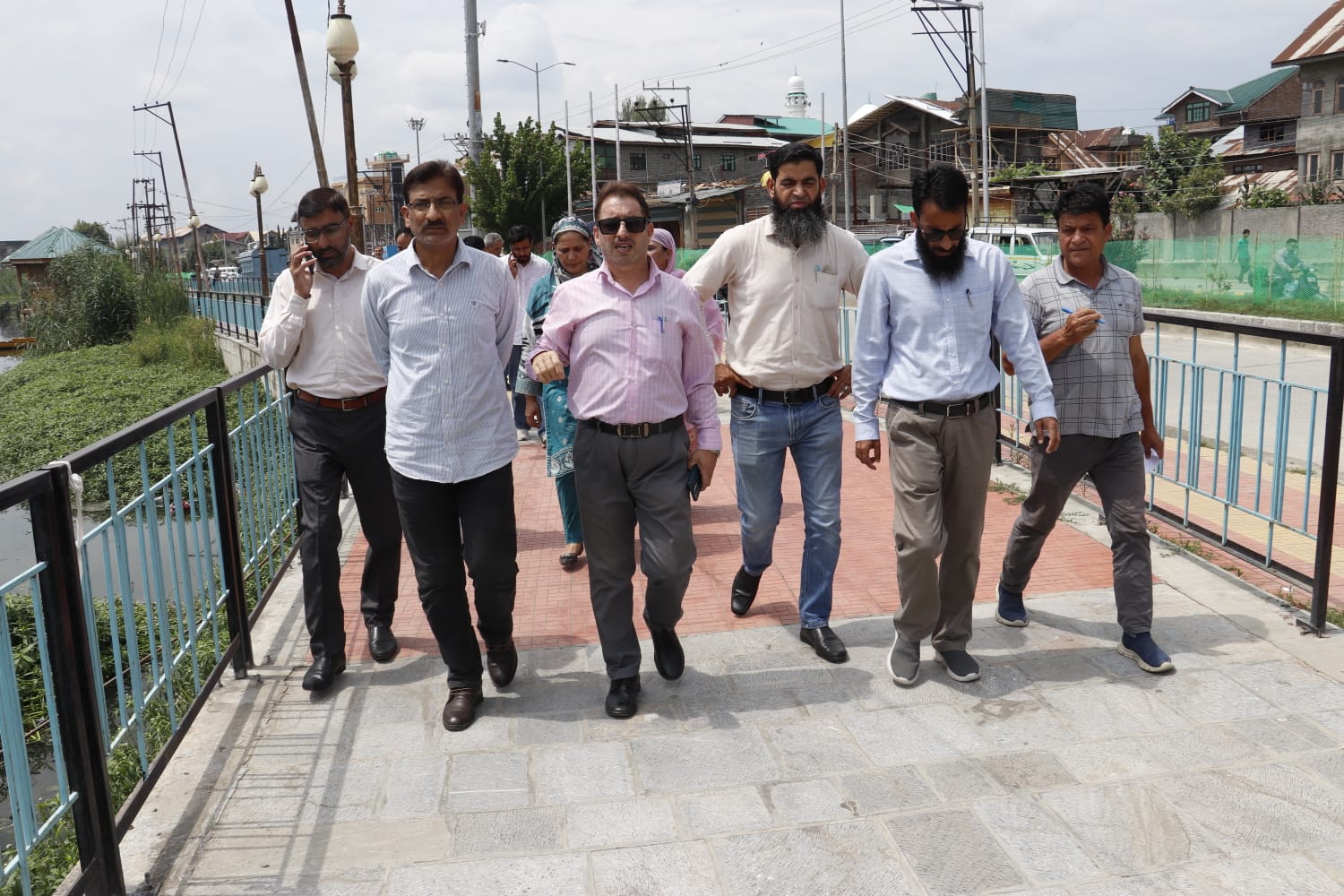
SRINAGAR, AUGUST 04 — Vice Chairman of the J&K Lake Conservation & Management Authority (JKLCMA), Khurshid Ahmad Shah, conducted a comprehensive field inspection of Brari Nambal and Khushalsar lakes to evaluate the progress and quality of ongoing conservation and rejuvenation projects. Accompanied by a senior team—including the Collector, Executive Engineers from Lake Divisions 1st and 2nd, the Mechanical Executive Engineer, the Enforcement Officer, Assistant Executive Engineers, and JKLCMA scientists—the leadership assessed ground-level execution to ensure ecological standards are being rigorously maintained across both water bodies.
During the visit to Brari Nambal, the focus centered on evaluating physical progress and testing the effectiveness of shoreline cleanup strategies. Shah inspected active cleaning operations along the lake’s perimeter, instructing field teams to execute a thorough removal of weeds, accumulated solid waste, and organic debris. Emphasizing the need for continuous maintenance to preserve both aesthetic value and ecological health, clear directives were issued to executing agencies to strictly adhere to designated quality benchmarks while keeping project timelines on track.
At Khushalsar Lake, attention shifted to active mechanical restoration work. Shah personally inspected dredging operations along two major feeder channels—extending from Saidapora Bridge to Firdousa Abad and Sazgaripora—currently being executed using departmental Water Master machinery. He urged officers to accelerate critical activities, including key channel desilting, encroachment removal, and the structural strengthening of lake embankments. Seamless inter-departmental coordination among engineering, enforcement, and field staff was highlighted as vital to reaching long-term environmental goals.
Throughout the inspection, accompanying officials provided detailed briefings on milestones achieved, current field challenges, and strategic blueprints for remaining phases. Directing staff to resolve operational bottlenecks on priority, the Vice Chairman mandated strict, continuous monitoring to guarantee the successful, long-term ecological revival of both urban water systems.