
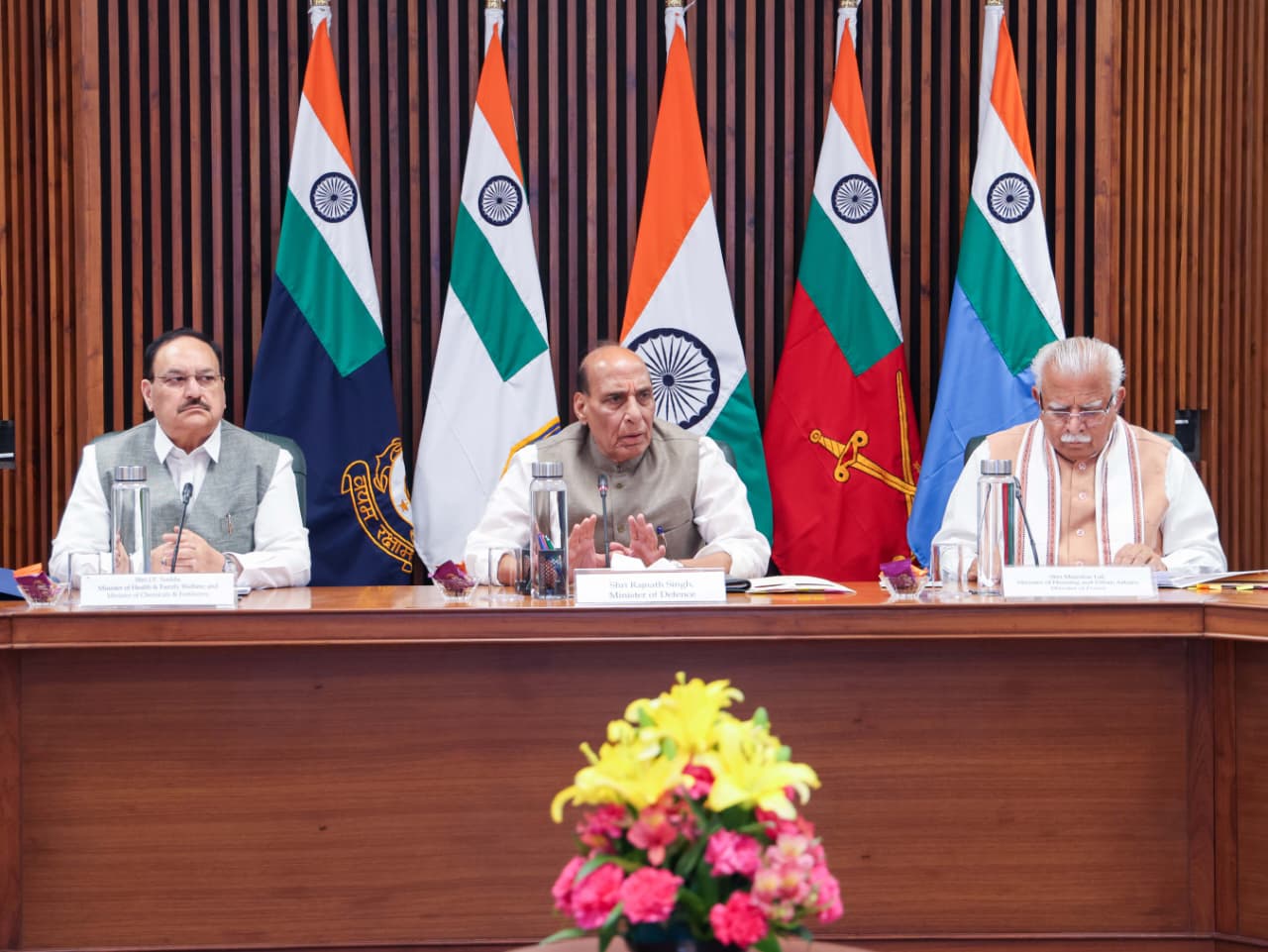
West Asia Crisis: Rajnath Singh-Led IGoM Assures Robust Supply Chains, Urges Citizens to Avoid Panic Buying
NEW DELHI, May 27, 2026: In a decisive move to counter market anxieties stemming from the ongoing West Asia conflict, the high-level Informal Group of Ministers (IGoM), chaired by Raksha Mantri Shri Rajnath Singh, convened its sixth meeting today at Kartavya Bhawan-2. The ministerial panel thoroughly reviewed India’s geopolitical preparedness, the resilience of domestic supply chains, and the stock security of vital goods. Emphasizing that national supplies remain entirely stable, the Defense Minister assured citizens that the government is leaving no stone unturned to safeguard economic stability, urging the public to completely avoid panic buying of fuel, including petrol, diesel, and LPG.
The extensive review confirmed that India’s domestic fuel security rests on a highly stable foundation. Operating as the world’s fourth-largest refiner, India boasts an installed capacity of 258.1 MTPA, which comfortably eclipses the previous fiscal year’s domestic consumption of 243.2 MT, leaving an exportable surplus of roughly 61.5 MT of petroleum products annually. To buffer the public from external market shocks, Public Sector Oil Marketing Companies (OMCs) have aggressively insulated retail consumers by absorbing massive losses of approximately ₹550 crore per day, choosing not to pass volatile international price hikes onto the general population. However, because industrial and commercial diesel prices track global benchmarks, authorities noted a rising trend of industrial entities buying subsidized retail fuel or hoarding via local dealers. In response, the Ministry of Petroleum, OMCs, and state administrations have launched synchronized field enforcement crackdowns to curb black marketing and uphold supply integrity.
+-------------------------------------------------------------------------------+
|             POST-CRISIS FERTILIZER INVENTORY MATRIX (IN LMT)                  |
+---------------------+-------------------------+-------------------------------+
| Product Type        | Domestic Production     | Import Arrivals at Ports      |
+---------------------+-------------------------+-------------------------------+
| Urea                | 59.51                   | 13.60                         |
| DAP                 | 8.26                    | 0.88                          |
| NPKs                | 19.38                   | 5.65                          |
| SSF                 | 11.24                   | 0.00                          |
| MOP                 | 0.00                    | 3.83                          |
+---------------------+-------------------------+-------------------------------+
| TOTAL               | 98.39                   | 23.96                         |
+---------------------+-------------------------+-------------------------------+
Parallelly, the IGoM reported an exceptionally comfortable outlook for the agricultural sector ahead of the Kharif 2026 season. Against a total projected seasonal demand of 390.54 LMT assessed by the Department of Agriculture & Farmers Welfare, India already holds a stockpile of 200.47 LMT—amounting to over 51% of the total requirement, which sits dramatically higher than the historical average of 33% for this time of year. Post-crisis logistics management has successfully injected 122.4 LMT of fertilizers into the active system through a mix of domestic manufacturing and strategic imports. Furthermore, India has secured an additional 15 LMT of DAP (including TSP) and 10 LMT of NPKs slated to arrive across May and June to easily cover peak seasonal farming demands.
To maintain this momentum, the Department of Fertilizers is clearing subsidy bills weekly to keep manufacturer liquidity high, while the Empowered Group of Secretaries (EGoS) has conducted ten separate high-level interventions to resolve immediate logistics bottlenecks. Beyond agriculture, the panel highlighted positive feedback from India’s MSME sector, which has lauded the timely rollout of the Emergency Credit Line Guarantee Scheme (ECLGS) 5.0 for effectively mitigating working capital stress during global disruptions. The IGoM concluded by expressing profound gratitude to Prime Minister Narendra Modi for his strategic, farsighted leadership in insulating the Indian population from the economic fallout of international conflicts.