
ICMR Transfers Indigenous Medical Technologies to Industry on National Technology Day 2026
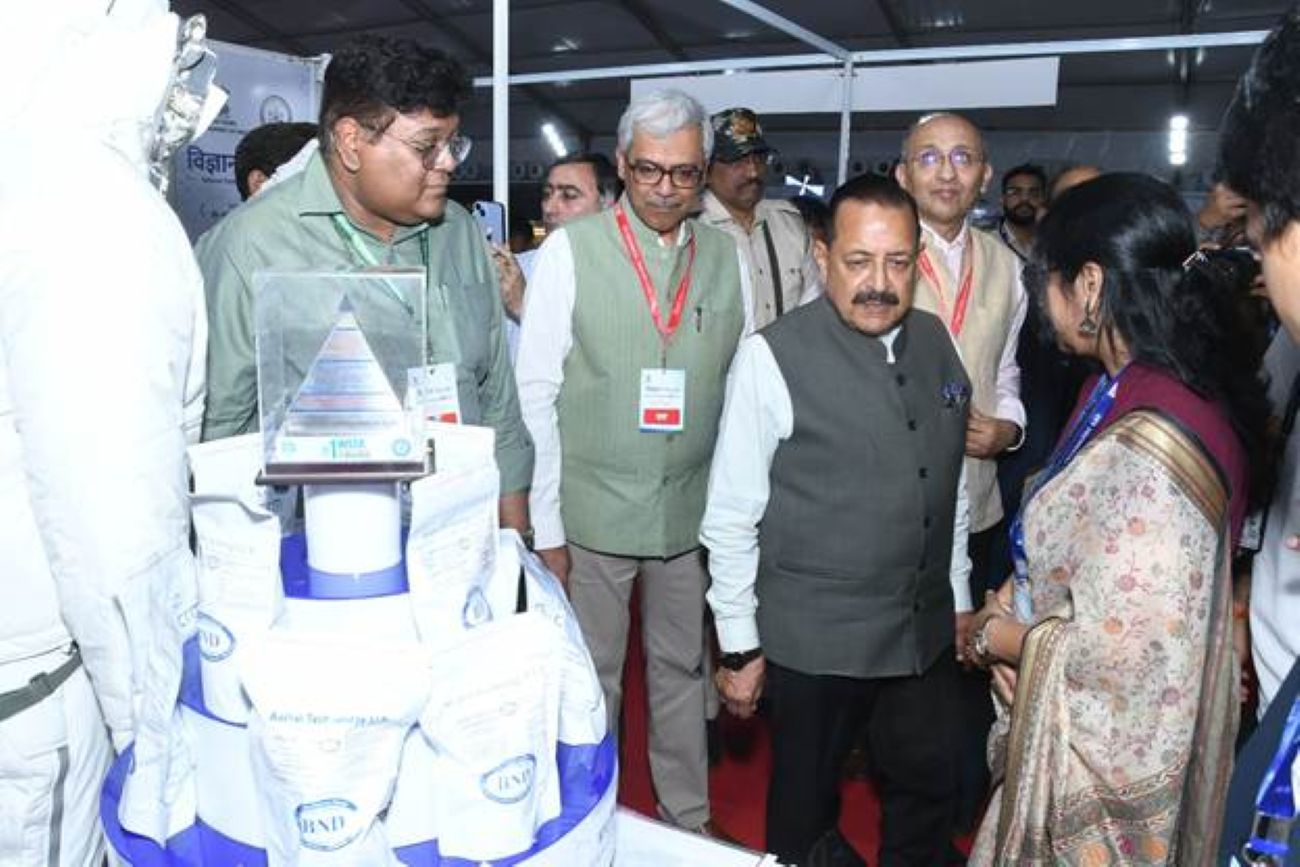
NEW DELHI, MAY 11, 2026 — The Indian Council of Medical Research (ICMR) marked National Technology Day 2026 by transferring three high-impact indigenous medical technologies to industry partners during the ‘विज्ञान–Tech’ program at the National Institute of Immunology. This initiative, coordinated by the Office of the Principal Scientific Adviser and the Department of Biotechnology, adopted a “Whole-of-Government” approach by uniting 14 scientific ministries to showcase India’s technological progress. The event was attended by Minister of State for Science & Technology Jitendra Singh, Principal Scientific Adviser Ajay Kumar Sood, and Director General of ICMR Rajiv Behl. During the exhibition, ICMR presented six critical home-grown innovations, including Covaxin and the CRISPR-Cas-based TB Detection System, while featuring 25 additional promising technologies in an official national compendium.
A primary highlight of the session was the formal licensing of three specific diagnostic tools developed by ICMR institutes to private sector leaders. The first technology, a cost-effective PSP94 ELISA kit designed to guide prostate biopsy decisions, was transferred to Krishgen Labs. The second, a point-of-care diagnostic for coagulation disorders, was licensed to Meril Life Sciences, while a single-tube multiplex RT-PCR kit for the simultaneous detection of Dengue, Chikungunya, and Zika was handed over to Vanguard Life Sciences. These transfers, facilitated under the Medical Innovations Patent Mitra initiative, aim to bridge the gap between laboratory research and commercial availability, ensuring that public-funded innovations reach the masses as industry-ready solutions.
The ‘विज्ञान–Tech’ program served as a vital platform for strengthening the synergy between government research bodies and the private sector, reinforcing the “Make in Bharat” vision. By licensing these advanced diagnostics, ICMR continues to build a self-reliant healthcare ecosystem capable of addressing national health priorities through indigenous manufacturing. The successful exchange of these MoUs underscores a collective national commitment to fostering a robust innovation value chain, ultimately contributing to the goal of a technologically advanced and healthy “Viksit Bharat.”