
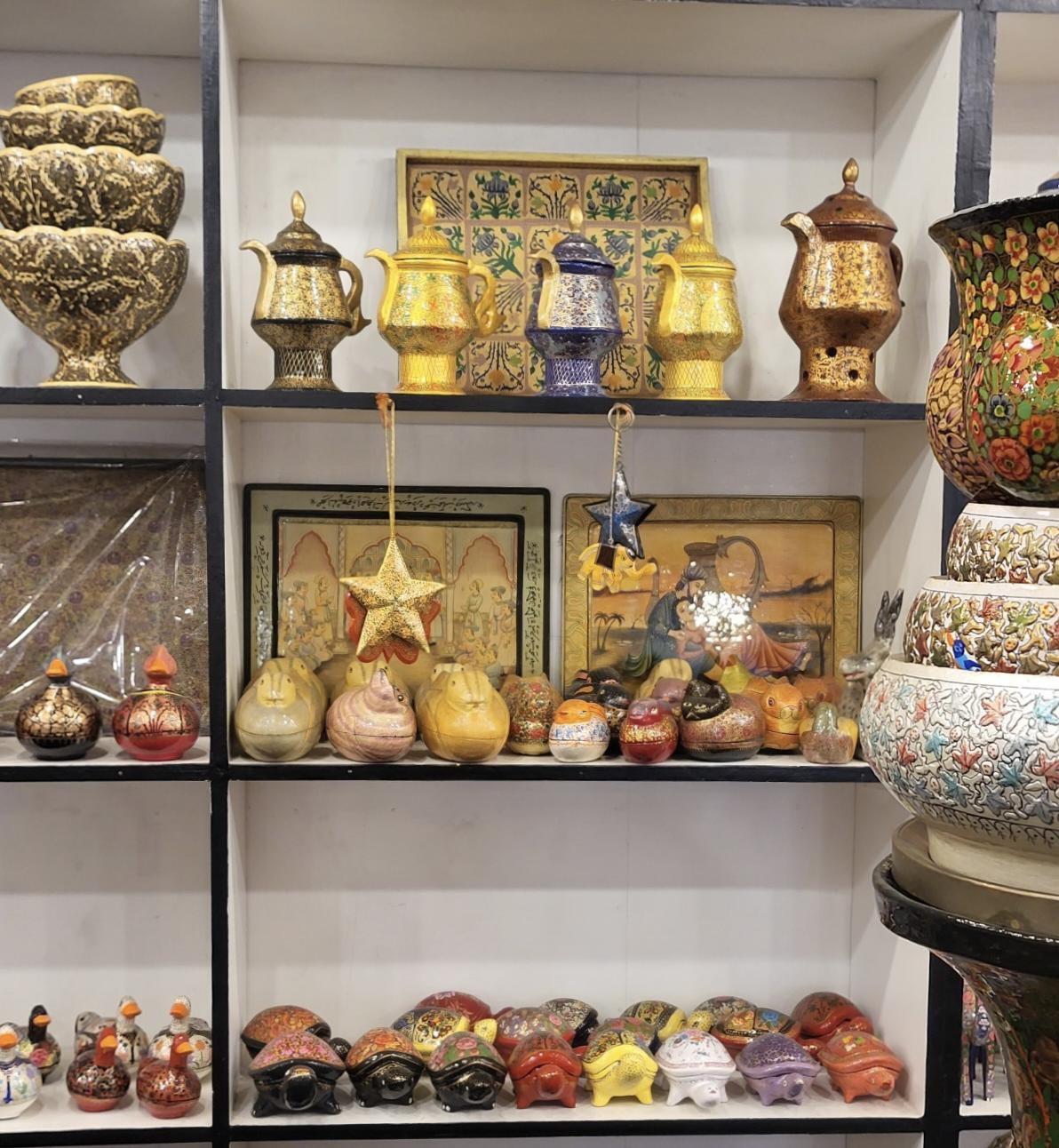
Kashmir’s GI-Tagged Papier Mache Thrives with 8,000 New Artisans; Department Refutes ‘Extinction’ Claims
Srinagar, January 31, 2026: The Handicrafts and Handloom Department, Kashmir, has strongly countered recent media reports suggesting the decline of the traditional papier mache craft.
Refuting a news story titled ‘The Art Will Die with Us’ published in a local daily, a departmental spokesperson clarified that the craft is experiencing a significant revival.
Official data reveals that the department has trained 8,102 new artisans across the valley through its 19 training centers, which produce approximately 400 skilled craftsmen annually.
The government is also actively registering artisans from the unorganized sector to ensure they benefit from flagship welfare schemes, proving that the craft is far from extinction.
The department highlighted that the craft has gained immense international prestige, with maestros like Fayaz Ahmad Jan and Iqbal Hussain Khan receiving the Padma Shri and Shilp Guru awards, respectively. To ensure the survival of traditional techniques, the Karkhandar Scheme was launched to facilitate the direct transfer of skills from master craftsmen to apprentices.
Furthermore, the Geographical Indication (GI) registration from Chennai has provided the craft with a unique global identity. Artisans can now utilize QR code-based labeling at the CDI Srinagar, which guarantees authenticity and helps the craft penetrate high-end international markets.Economically, papier mache remains a powerhouse in Kashmir’s non-textile sector.
In the last decade alone, artefacts worth Rs 212.06 crore have been exported, marking the highest export figures for any non-textile craft in the region. The department continues to promote these artisans through the “Know Your Artisan” campaign and by facilitating their participation in major national trade fairs like the IITF at Bharat Mandapam and the Suraj Kund Mela.
By combining traditional heritage with modern marketing and financial support, the department maintains that the future of Kashmir’s papier mache is robust and expanding.