
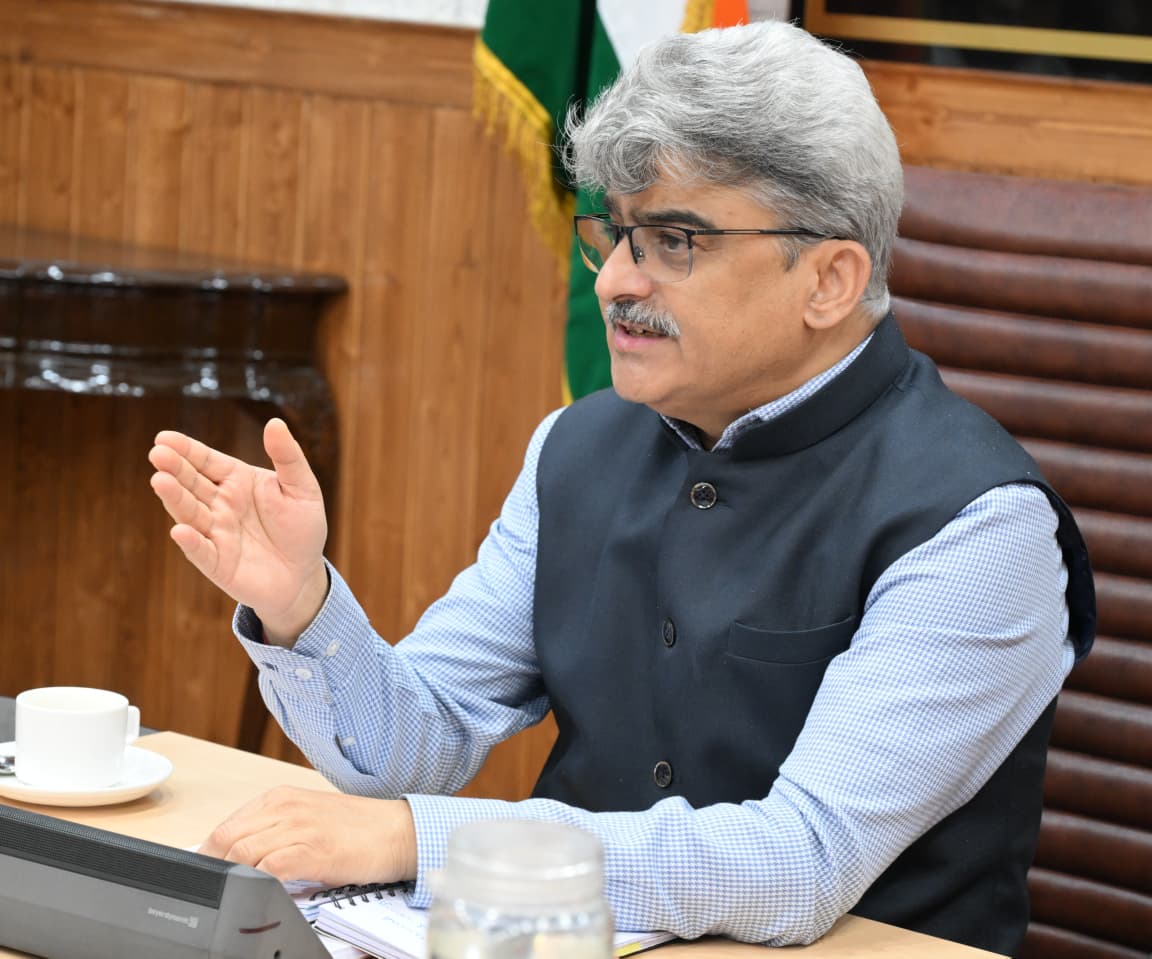
Jammu & Kashmir Accelerates Labour Reforms: Chief Secretary Atal Dulloo Reviews Implementation Readiness of Four New Labour Codes
SRINAGAR, JULY 15, 2026 — In a major push toward modernizing its industrial and labour landscape, the Union Territory of Jammu & Kashmir is making rapid strides toward the rollout of India’s landmark labour reforms. Chief Secretary Atal Dulloo today chaired a high-level review meeting to evaluate the preparedness of the Labour & Employment Department for implementing the four new Labour Codes. The session, which brought together key administrative figures including the Secretary of Labour & Employment, Commissioner Secretary of Law, Director General of Codes, and the Labour Commissioner, featured a comprehensive presentation detailing J&K’s operational roadmap, rule-making status, digital integration, and extensive stakeholder outreach.
Chief Secretary Dulloo emphasized that the transition to the new framework is a transformative milestone that will bolster labour welfare, secure social safety nets, foster industrial harmony, and significantly enhance the ease of doing business across the region. Expressing high confidence that these reforms will drive inclusive economic growth and formalize employment, the Chief Secretary praised the department’s proactive efforts. However, he also issued strict directives to accelerate the final notification of the remaining rules, deepen coordination with the central government for digital integration, constitute the requisite statutory boards, and sustain widespread awareness campaigns to ensure a seamless transition for both workers and employers.
Highlighting the historic scale of these changes, Secretary of Labour & Employment, Kumar Rajeev Ranjan, noted that the consolidation of 29 legacy Central Labour Laws into four streamlined codes—specifically the Code on Wages (2019), the Industrial Relations Code (2020), the Code on Social Security (2020), and the Occupational Safety, Health and Working Conditions Code (2020)—represents one of the most vital policy overhauls in independent India. J&K has emerged as a frontrunner nationwide in drafting and advancing these statutory frameworks. Providing a granular update, Labour Commissioner Charandeep Singh confirmed that the rules for all four codes have been drafted. The rules under the Industrial Relations Code have already been officially gazetted, while those for the Occupational Safety Code are in their final notification phase. Meanwhile, draft rules for the Wage and Social Security codes have been pre-published and are currently undergoing active statutory public consultations.
To prepare the local ecosystem, the administration has executed massive grassroots outreach campaigns. To date, the department has organized 617 Information, Education, and Communication (IEC) camps spanning all 20 districts of J&K, successfully sensitizing nearly five lakh workers and employers. Additionally, the territory has conducted 283 capacity-building and specialized training workshops—some in collaboration with the Union Ministry of Labour & Employment—benefiting over 7,200 administrative officers, trade union representatives, and employers.
These structural reforms are set to fundamentally alter employee benefits in J&K by introducing universal minimum wage protection, establishing a National Floor Wage, and implementing a unified definition of “wages” to guarantee higher Provident Fund, gratuity, and social security payouts. To govern and guide these policies, J&K is establishing four new statutory bodies: the State Social Security Board for Unorganised Workers, the Building and Other Construction Workers’ Welfare Board, the State Advisory Board on Wages and Industrial Relations, and the Occupational Safety and Health Advisory Board. Supported by a proposed allocation of ₹10.44 crore currently with the Finance Department, J&K’s mission-mode implementation strategy will also feature a dedicated Project Management Unit, block-level Shram Sahayiks to assist workers, and robust IT infrastructure integrated with national web portals to ensure transparent, technology-driven, and worker-centric governance.