
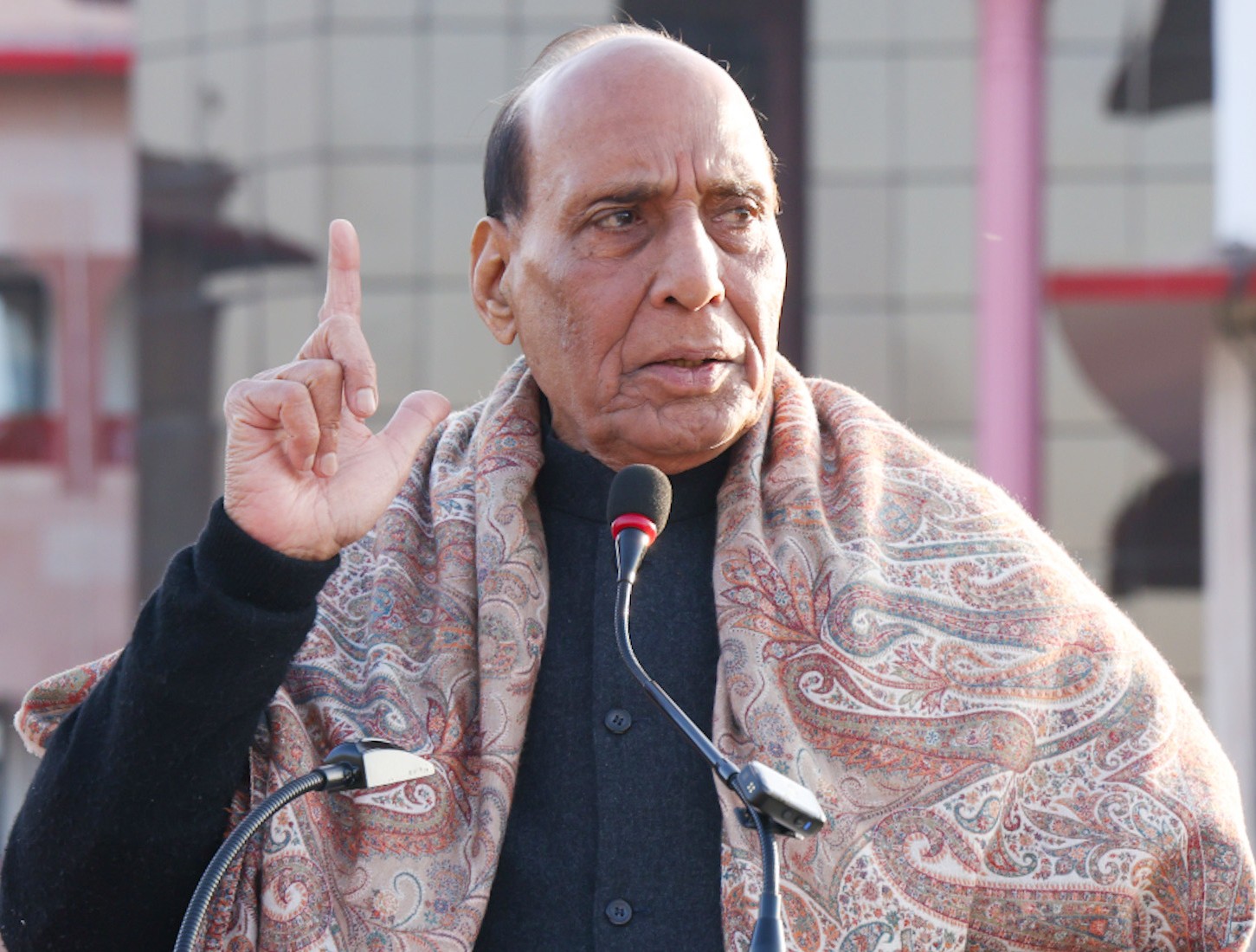
India Defence Production Targets ₹2 Lakh Crore: Operation Sindoor Highlights Global Readiness Says Rajnath singh
NEW DELHI, 18 JUL 2026 :- Operation Sindoor stands as definitive proof of India’s cutting-edge and modernized military preparedness, driven by a decade-long overhaul of the domestic defence sector under the principle of prioritizing the nation and its armed forces. Speaking at an event in New Delhi, Defence Minister Rajnath Singh declared that the complex military operation showcased the country’s unmatched operational capabilities and its strict zero-tolerance policy against terrorism. Singh emphasized that the nation now possesses the absolute capability to neutralize terror threats both at its borders and deep within hostile territories. He noted that the success of the mission relied heavily on technologically advanced, indigenously manufactured systems—including the Akash Teer, the Akash missile system, and BrahMos supersonic missiles—reflecting the deep integration of domestic industrial capabilities into modern warfare.
To systematically eliminate foreign import dependencies, the Ministry of Defence has aggressively expanded its domestic manufacturing roadmap. The armed forces and Defence Public Sector Undertakings (DPSUs) have officially implemented positive indigenisation lists covering 509 and 5,012 items respectively, with another comprehensive list scheduled for notification shortly. These strategic measures have successfully transformed India’s defence economy. Annual production surged to a historic high of approximately ₹1.78 lakh crore in the 2025-26 financial year compared to just ₹40,000 crore in 2014, while defence exports skyrocketed from ₹686 crore to an unprecedented ₹38,000 crore over the same period. The government has set an ambitious domestic defence production target to surpass ₹2 lakh crore this year, aiming for ₹3 lakh crore by 2029, alongside an export target of ₹50,000 crore.
Central to this industrial transformation is the rapid development of specialized defence industrial corridors in Uttar Pradesh and Tamil Nadu. These hubs have attracted ₹70,000 crore in proposed investments—with ₹10,000 crore already deployed—allowing local manufacturers to successfully integrate into global aerospace and defence supply chains. Furthermore, under the updated Defence Acquisition Procedure (DAP) arriving later this year, 75 percent of the modernization budget remains strictly reserved for domestic procurement, heavily prioritizing indigenous design and development. The government’s structural reforms, including the successful corporatisation of the Ordnance Factory Board, have successfully turned previously loss-making legacy entities into highly profitable, technology-driven manufacturing units.
This self-reliance ecosystem is heavily reinforced by massive financial and structural support dedicated to research, development, and innovation among grassroots enterprises. Through flagship programs like Innovations for Defence Excellence (iDEX), iDEX Prime, and the ADITI scheme, procurement worth over ₹2,400 crore has been cleared exclusively from startups and MSMEs, while an additional ₹1,500 crore has been allocated for emerging technologies. As of March 2026, 676 innovators have engaged via iDEX, yielding 551 signed contracts and swelling the total number of defence startups past the 2,000 mark. Singh concluded by stating that India’s proactive defence diplomacy now spans technical and industrial collaborations across the Indo-Pacific—highlighted by recent strategic advancements with Indonesia, Australia, and New Zealand—positioning the nation to emerge as a fully self-reliant global defence power well ahead of its 2047 centenary goals.