
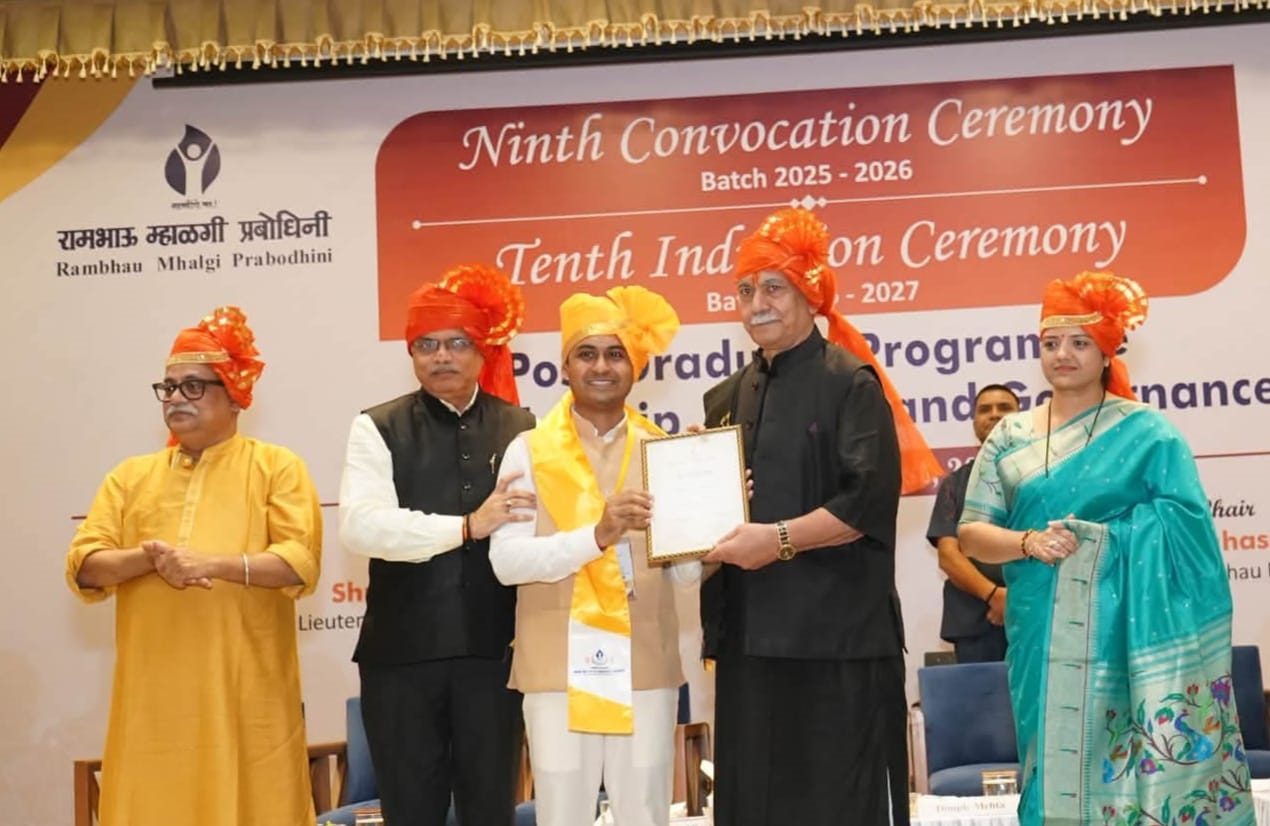
Ethical Leadership and Governance Key to Building a Stronger Nation: Jammu Kashmir LG Manoj Sinha Addresses IIDL Convocation
SRINAGAR, AUGUST 08, 2026: Addressing the convocation ceremony of the ninth batch and the induction ceremony of the tenth batch of the Indian Institute of Democratic Leadership (IIDL)—an initiative of Rambhau Mhalgi Prabodhini, Mumbai—Lieutenant Governor Manoj Sinha emphasized that true leadership is defined by understanding people, opening new pathways, and serving the public with humility and honesty. Welcoming the fresh batch and congratulating the outgoing graduates stepping into public life, Sinha highlighted the historic role played by Rambhau Mhalgi Prabodhini since its establishment in 1982. Having trained over 60,000 parliamentarians, legislators, panchayat representatives, entrepreneurs, and youth, the institution has made immense contributions to strengthening capacity building, democratic governance, and youth-led leadership across India.
Outlining four foundational principles for democratic leadership—honesty and transparency to build trust, knowledge and wisdom to guide decisions, sensitivity to maintain democratic balance, and public service as the highest duty—Sinha noted that institutional strength relies heavily on ethical stewardship. While institutions form the structural framework of democracy, it is accountable leadership that gives them purpose and vitality; without ethics, even the finest institutions weaken over time. Drawing from ancient Indian scriptures and quoting Sardar Patel, he reminded the young audience that brave leaders find a way during difficult times, urging them to live up to the institute’s guiding motto, Lokahitam Mam Karaniyam (Welfare of the people is my duty).
Sinha stressed that India stands at a crucial juncture where its massive demographic dividend—with over 65 percent of its population under the age of 35—must be converted into a leadership dividend. He cited the governance transformation in Jammu Kashmir post-2020 as a practical model of leadership rooted in public service, where transparent processes, digital governance, and strengthened Panchayati Raj institutions facilitated the completion of over 30,000 public participation projects. Moving forward, he stated that the nation’s future relies on tackling seven major challenges: sustaining long-term economic growth, eliminating divisive forces and terrorism, curbing corruption through tech-driven governance, ensuring merit-based political opportunities, fostering national integration, achieving global mastery in emerging technologies like AI and semiconductors, and building a world-class, research-driven education system.
Concluding his address, the Lieutenant Governor called on the emerging leaders to drive innovation, uphold transparency, and put the national interest first to help realize the vision of Viksit Bharat. He urged the youth to measure their ultimate success not by position or rank, but by their ability to positively transform lives, earn public trust, and extend the benefits of development to the last person standing in the queue.