
Chief Secretary Reviews HADP Progress as Programme Generates 368 Crore Revenue and Massive Employment in J&K
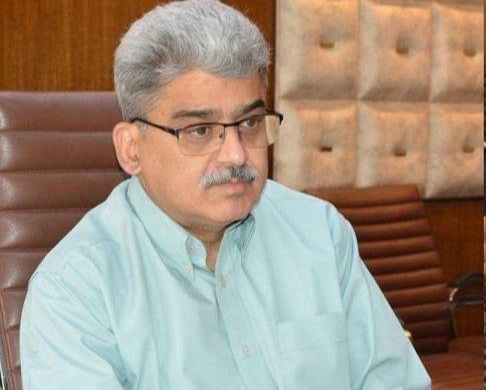
JAMMU, APRIL 25: Chief Secretary Atal Dulloo today chaired a high-level meeting to assess the implementation of the Holistic Agriculture Development Programme (HADP) across Jammu and Kashmir.
The review revealed significant achievements, including the establishment of 1.11 lakh units and the generation of 2.45 crore man-days of employment. Highlighting the financial viability of the initiative, the Chief Secretary noted that a government subsidy of approximately 450 crore is expected to be recovered within less than three years through increased farm incomes.
He urged departments to move beyond slogans and focus on data-driven results, specifically calling for a faster conversion rate from application approvals to the actual establishment of units, which currently stands at 25 percent.During the session, it was reported that the HADP has benefited nearly 75,000 unique farming families, yielding an annual profit of 173 crore and an average income boost of 25,000 per family.
While the programme has achieved full geographic coverage across all 20 districts, the Chief Secretary emphasized the need to expand outreach to the remaining 91 percent of PM-Kisan beneficiaries who are not yet covered.
He specifically identified districts such as Poonch, Kishtwar, and Reasi for focused intervention to bridge the gap with high-performing areas like Kulgam and Shopian.
The meeting also highlighted the success of the 1,807 functional Kisan Khidmat Ghars, which have served over 8 lakh farmers and maintain a high fund utilization rate.To further strengthen the agricultural landscape, the Chief Secretary directed officials to enhance training programs and improve the eKYC completion process for farmers.
Managing Director of J&K Bank, Amitava Chatterjee, presented a roadmap for digital integration to streamline the HADP portal, ensuring seamless institutional support for applicants. With 29 integrated projects spanning horticulture, livestock, and agriculture, the HADP continues to be a cornerstone for rural transformation.
The Chief Secretary concluded by stressing the importance of accountability, time-bound grievance redressal, and the scaling up of high-value sectors like dairy and agri-marketing to maximize the programme’s long-term impact on the Union Territory’s economy.