
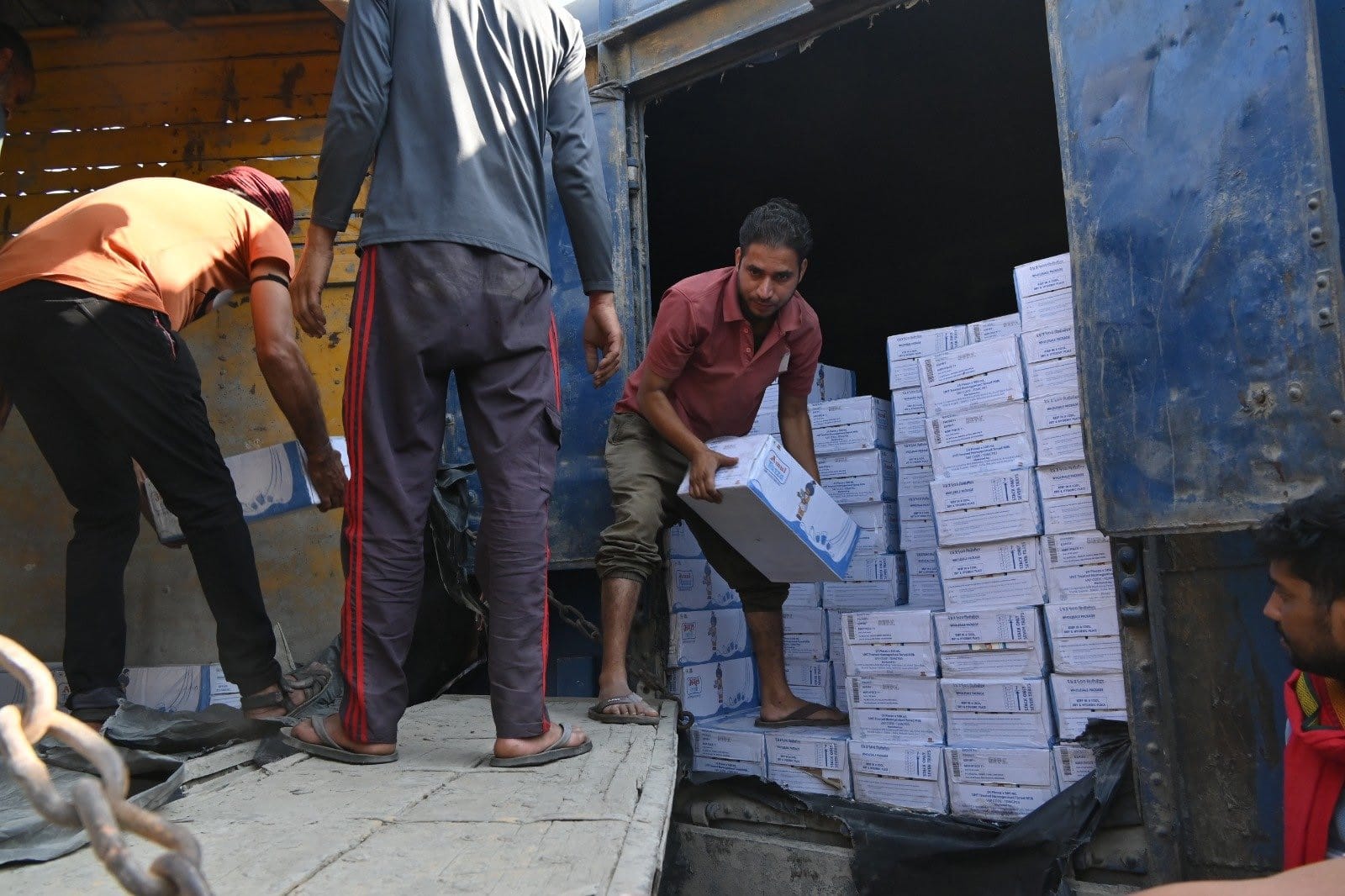
First Amul Milk Freight Train Arrives in Jammu and Kashmir from Gujarat
JAMMU, Apr 23 — The Jammu division of Indian Railways has achieved a historic milestone with the arrival of the first-ever special milk freight train from Gujarat. This initiative is designed to ensure the seamless availability of dairy products throughout Jammu and Kashmir while strengthening regional food security.
Railway authorities noted that the development highlights a commitment to enhancing supply chains to remote areas, ensuring that nutritious dairy items remain accessible to the local population without interruption.
The special freight train consisted of 20 BCN wagons loaded with products from the Gujarat Cooperative Milk Marketing Federation (Amul).
After departing from the Linch Goods Shed in the Ahmedabad Division on April 20, the consignment reached the Bari Brahman and Anantnag goods sheds. The cargo was split equally, with 10 wagons unloaded at each location.
Each set delivered approximately 500 tonnes of essential items, including toned milk, milk powder, buttermilk, and lassi.Uchit Singhal, Senior Divisional Commercial Manager, described the event as a proud moment for the Jammu Division.
He explained that the rail link was specifically planned to meet the needs of citizens, traders, and families by ensuring a round-the-clock supply of fresh goods.
Singhal further emphasized that transporting these goods by rail significantly reduces both costs and transit time compared to traditional road routes, providing a direct benefit to local markets and consumers.
This achievement follows a previous logistical success in October 2025, when the division facilitated the transport of 1,350 tonnes of industrial salt from Gujarat to Anantnag.
The introduction of the milk freight train is expected to further bolster economic ties between the two regions, directly linking Gujarat’s dairy and industrial sectors with markets in the Kashmir Valley.
Moving forward, the Jammu division intends to continue such initiatives to improve logistical efficiency and support regional economic stability.