
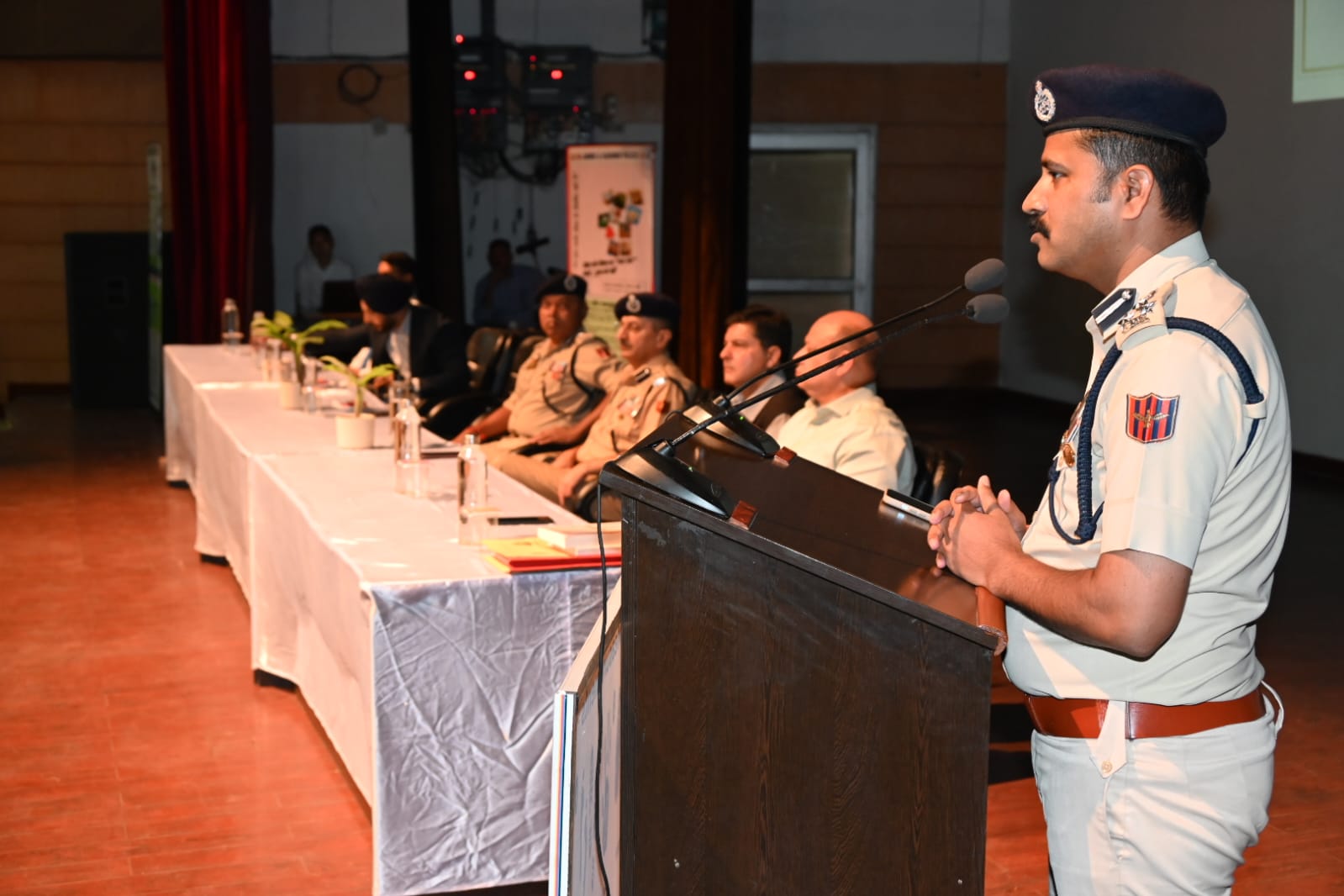
J&K Anti-Narcotics Task Force Launches Two-Day Capacity Building Programme Under Nasha Mukt Abhiyan
JAMMU, JUNE 17: As part of the ongoing 100-Day “Nasha Mukt J&K Abhiyan” initiated on April 11, 2026, the Anti-Narcotics Task Force (ANTF) Crime Branch J&K commenced a specialized two-day capacity-building training programme today for investigating officers at the Police Auditorium, Gulshan Ground, Jammu. The initiative was officially inaugurated by the Chief Guest, Inspector General of Police (IGP) Jammu Zone, Bhim Sen Tuti. In his inaugural address, the IGP emphasized that eradicating the drug menace demands a comprehensive, multi-dimensional strategy that seamlessly integrates strict enforcement, meticulous investigation, effective legal prosecution, victim rehabilitation, and active community participation. He highlighted that well-trained investigating officers serve as the foundational backbone of the criminal justice system, playing a pivotal role in dismantling sophisticated drug trafficking networks and securing legal convictions.
A total of 120 investigating officers selected from the Jammu-Kathua-Samba (JKS) Range and the Udhampur-Reasi (UR) Range are participating in the intensive workshop. The primary objective of the programme is to enhance the professional competence of field investigators handling cases under the Narcotic Drugs and Psychotropic Substances (NDPS) Act and to fortify institutional capabilities against narcotics smuggling. Through the 100-Day Abhiyan, authorities aim to disrupt supply chains, pinpoint drug hotspots, and sensitize vulnerable segments of society by combining enforcement with community-driven prevention and rehabilitation efforts.
The comprehensive two-day curriculum features specialized sessions detailing both the local drug trafficking landscape in Jammu & Kashmir and the broader national perspective. Subject matter experts from the Narcotics Control Bureau (NCB), senior police officers, forensic specialists, and legal practitioners are leading discussions on the legal provisions of the NDPS Act, advanced investigative techniques, recent technological developments, and forensic fingerprint applications via the National Automated Fingerprint Identification System (NAFIS). The training also includes detailed case studies tracking investigations from the initial registration of a First Information Report (FIR) to the submission of the final charge sheet. ANTF officials reiterated that sharp investigative skills, rigorous evidence collection, and technological integration are vital to ensuring successful prosecutions and establishing a strong deterrent against traffickers. The programme is scheduled to conclude on June 18, 2026, following practical evaluation exercises, feedback sessions, and the distribution of participation certificates.