
Udhampur National Conference Protests Security Lapse Following Attack on Dr. Farooq Abdullah; Demands Immediate Accountability
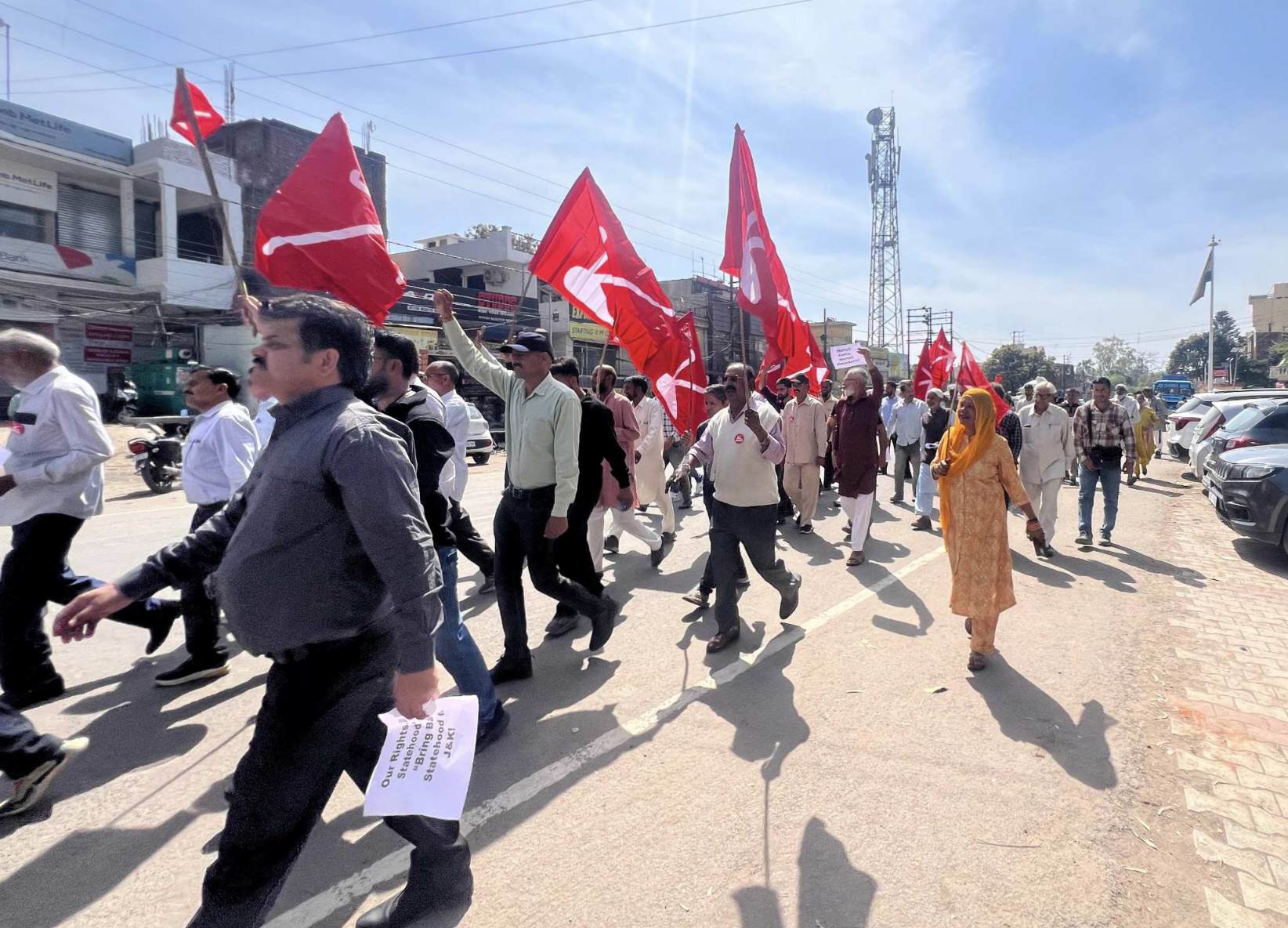
UDHAMPUR, March 13, 2026: The Udhampur Unit of the Jammu & Kashmir National Conference (JKNC) staged a massive protest march today at the district headquarters, condemning the recent security breach and attack on party president Dr. Farooq Abdullah.
Led by District President Sunil Verma, party workers marched from the National Conference district office to Salathia Chowk, raising slogans against the deteriorating law and order situation in the Union Territory.
The protest follows a high-profile assault on the Z-plus security protectee during a public function in Jammu, an incident that has sparked widespread concerns over the safety of both political leaders and the general public in J&K.
Addressing the media during the demonstration, Sunil Verma questioned the administrative accountability of the Lieutenant Governor’s office, stating that if a former Chief Minister and Union Minister is not safe despite top-tier security, the vulnerability of ordinary citizens is immense.
Supporting this stance, additional spokesperson Akash Verma argued that the attack exposes the fragility of the “normalcy” narrative promoted after the abrogation of Article 370.
He emphasized that the current dual power structure has hampered democratic governance and called for the immediate restoration of statehood, allowing an elected government to take direct control of law and order.
Senior leader Lal Chand Musafir joined the call for a transparent and thorough investigation into the attacker’s motives, particularly following reports that the individual may have harbored intent for two decades.
The protest, which saw significant participation from district functionaries including Mir Qasim, Manmohan Verma, and various wing representatives, concluded with a demand for a complete overhaul of the security architecture.
The party reiterated that the responsibility for this failure lies squarely with the current administration and urged for systemic reforms to prevent such high-stakes security lapses in the future.