U.S. and India Ink Historic Interim Trade Deal: Tariffs Slashed, $500B Energy & Tech Pact Unveiled
NEW DELHI / WASHINGTON, D.C. — In a historic shift for global commerce, the United States and India have finalized a transformative framework for an Interim Trade Agreement, signaling a decisive end to months of tariff escalations and establishing a roadmap for a comprehensive Bilateral Trade Agreement (BTA).
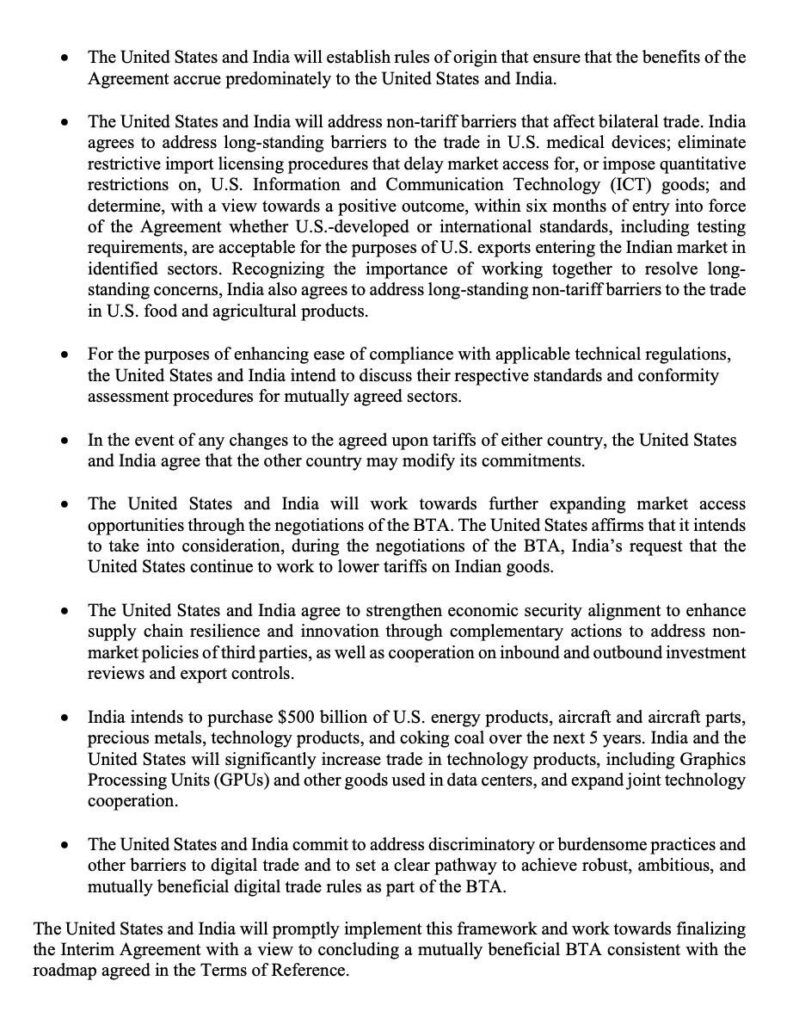
Under the breakthrough terms announced in a February 2026 joint statement, the United States will slash its reciprocal tariff rate on Indian exports from a high of 50% down to 18% under Executive Order 14257, a move hailed by Indian Commerce Minister Piyush Goyal as a competitive advantage that places India’s trade terms ahead of its regional neighbors. In a massive reciprocal commitment, India has pledged to purchase $500 billion in American goods over the next five years—including energy products, aircraft, precious metals, and high-tech hardware like Graphics Processing Units (GPUs) for data centers—while simultaneously eliminating or reducing tariffs on all U.S. industrial goods and a broad spectrum of agricultural products ranging from soybean oil to wine and spirits.
The agreement strategically addresses long-standing non-tariff barriers, with India agreeing to streamline medical device regulations and ICT import licensing, while the U.S. will remove national security-linked tariffs on Indian aircraft parts, steel, and aluminum. This “aligned partner” framework not only secures resilient supply chains and enhances economic security against third-party non-market policies but also sets a clear pathway for robust digital trade rules, marking the most significant alignment of the world’s two largest democracies in the modern era.