
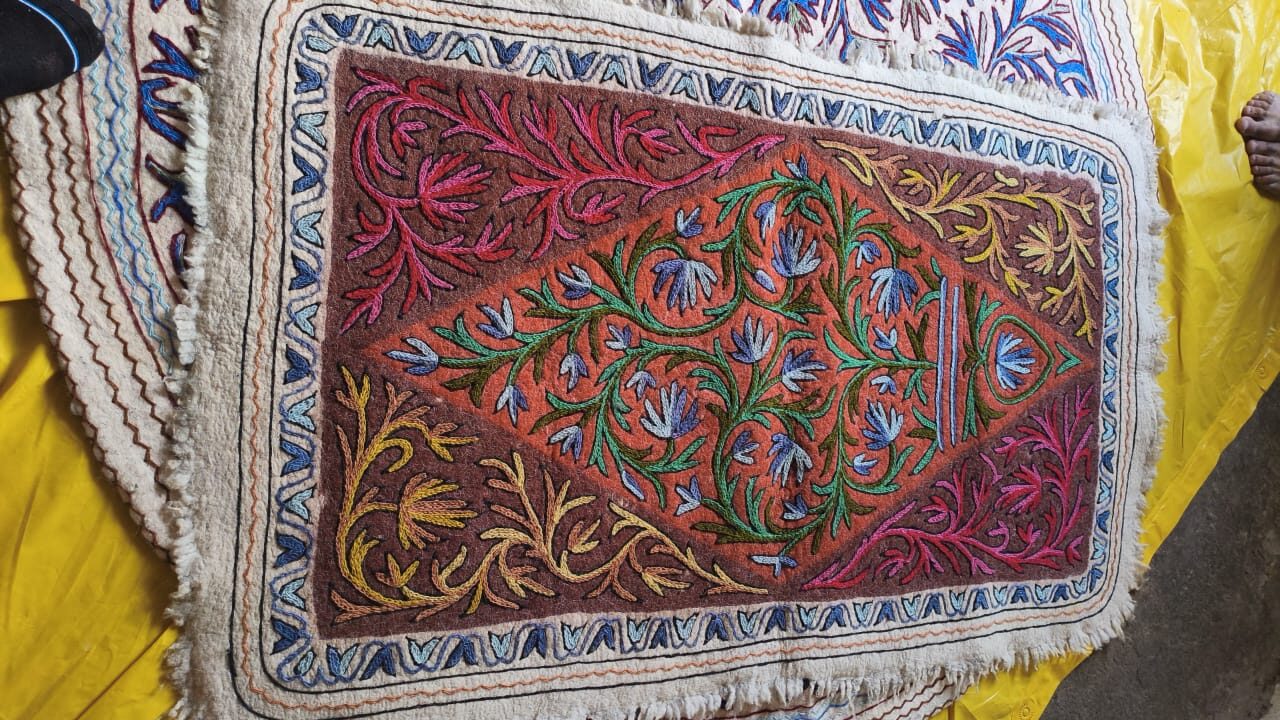
Revival of Kashmir’s Namda Craft: In-House Wool Carding to Slash Costs for Local Artisans
SRINAGAR January 21, 2026 :- The traditional Namda craft of Kashmir has received a significant boost toward total revival as the Department of Handicrafts & Handloom, Kashmir, finalized the contract for the installation and commissioning of advanced wool carding machinery.
This strategic move, executed through the Mechanical & Hospitals Engineering Department, introduces a facility with an annual processing capacity of approximately 29,000 kilograms of wool. By localizing the carding process, the department aims to eliminate the long-standing practice of outsourcing raw wool for processing outside the Union Territory, thereby drastically reducing production costs and lead times for local artisans.
Despite Jammu & Kashmir being the second-largest producer of wool fiber in India and the top producer of premium Merino wool, the lack of local infrastructure has historically forced artisans to pay higher prices for external processing.
Deputy Director UNDP, Mirza Shahid Ali, noted that this new initiative is a game-changer for the sector, offering a cost-effective and less labor-intensive solution that directly strengthens the livelihoods of those involved in Namda making.
The move is expected to enhance productivity and ensure that the value chain remains within the region, fostering economic sustainability.The installation of this modern infrastructure reflects the UT Administration’s commitment to preserving Kashmir’s rich handicraft heritage while making it globally competitive.
By providing technical support and reducing overheads, the department is ensuring that the Namda craft—once in decline—is now on a path of sustainable growth. This development not only safeguards the traditional skills of Kashmiri artisans but also positions the local wool industry as a self-reliant powerhouse, contributing to the broader goal of regional economic empowerment.