
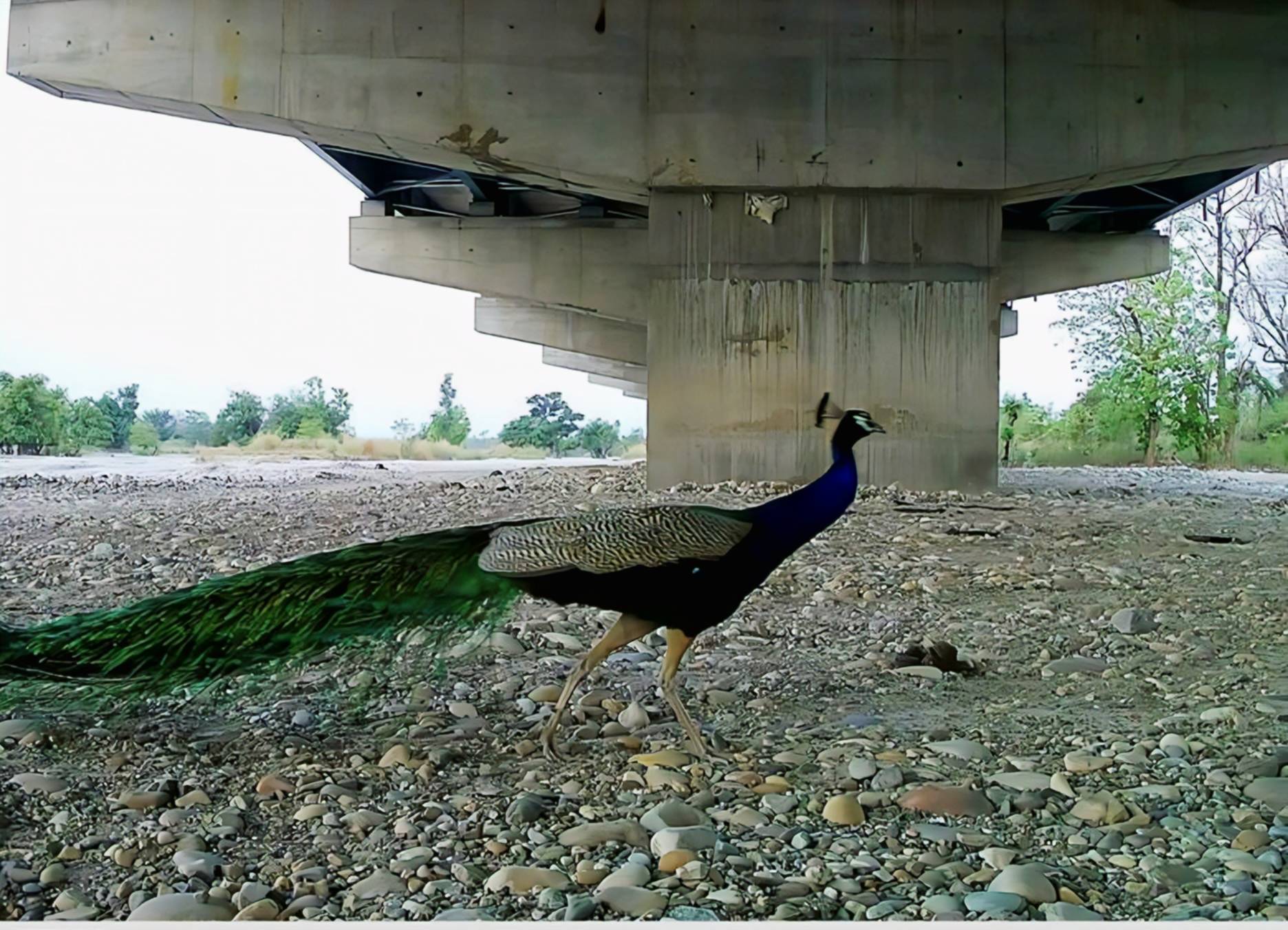
NHAI-WII Study Confirms Success of Wildlife Underpasses on Delhi–Dehradun Economic Corridor
NEW DELHI, April 10, 2026 — A landmark study conducted by the National Highways Authority of India (NHAI) in collaboration with the Wildlife Institute of India (WII) has validated the effectiveness of wildlife mitigation measures along the Delhi–Dehradun Economic Corridor.
The report, titled ‘Landscapes Reconnected’, provides empirical evidence that sustainable infrastructure can successfully coexist with ecologically sensitive habitats.
Focused on an 18 km stretch between Ganeshpur and Asharodi, the study monitored the movement of various species using the corridor’s specialized animal underpasses.
This section includes a 10.97 km long underpass system, featuring one of Asia’s largest elevated wildlife corridors designed with a height of 6 to 7 meters to facilitate the unobstructed passage of even the largest mammals.
The monitoring program utilized a sophisticated network of 150 high-tech camera traps and 29 AudioMoth acoustic recorders over a 40-day period across three distinct ecological zones. The research team captured a staggering 40,444 images of 18 unique wild species actively utilizing the underpasses.
While the Golden Jackal was the most frequent visitor, the study also documented significant movement of Nilgai, Sambar, Spotted Deer, and Indian Hares.
Most notably, the cameras recorded 60 instances of elephants safely navigating the corridors, proving that the infrastructure effectively supports the natural migration patterns of flagship species in the Shivalik range.
A critical finding of the study highlights the impact of “soundscape management” on animal behavior. Data revealed that while generalist species like wild boars have adapted to traffic noise, sensitive animals such as elephants and spotted deer prefer segments with lower sound levels.
Consequently, NHAI plans to implement advanced noise reduction strategies, including targeted sound barriers, to further assist noise-sensitive wildlife.
By reducing the likelihood of human-wildlife conflict and preventing population isolation, the Delhi–Dehradun Economic Corridor serves as a global model for integrating environmental sustainability and biodiversity conservation into large-scale national highway projects.