
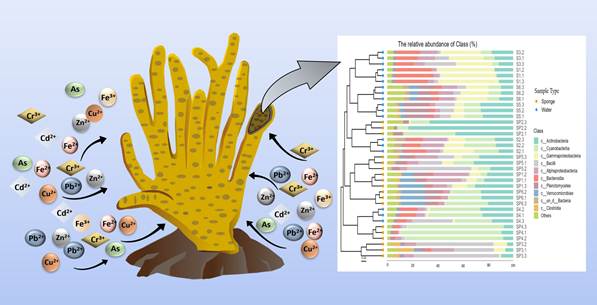
Nature’s Purifiers: Scientists Discover Sponge-Microbe Synergy as a Breakthrough in Metal Bioremediation
Kolkata, December 18, 2025 — In a groundbreaking discovery published in the journal Microbiology Spectrum, scientists from the Bose Institute have revealed that freshwater sponges and their associated microbial communities are powerful tools for tackling toxic metal pollution. The research, led by Abhrajyoti Ghosh and Dhruba Bhattacharya, focused on sponges within the Sundarban delta, uncovering their dual capability to act as both bioindicators and bioabsorbents. These ancient multicellular organisms filter vast quantities of water, and this study proves they can sequester high concentrations of dangerous heavy metals such as arsenic, lead, and cadmium from aquatic environments.
The study, supported by the DST-SERB National Post-Doctoral Fellowship, marks the first comprehensive report on bacterial diversity among Sundarban’s freshwater sponges. The findings indicate that the bacterial communities living within the sponges are distinct from those in the surrounding water, evolving specifically to survive in contaminated habitats. These symbiotic microbes are functionally enriched with specialized genes for metal ion transport and metal resistance. This suggests that the bacteria do not merely coexist with the sponge but actively participate in detoxifying the environment, making the sponge-microbe consortium an elite natural defense system against industrial and environmental runoff.
Given the escalating heavy metal crisis across the Gangetic plain, these sponges offer a sustainable and cost-effective solution for bioremediation. By monitoring the levels of toxins accumulated within these “nature’s water purifiers,” environmentalists can accurately assess water quality in estuarine and freshwater ecosystems. This pioneering research at the Bose Institute opens new avenues for using biological systems to restore polluted water bodies, shifting the focus of environmental management toward sustainable, nature-based technologies.