
J&K Budget Session 2026: Government Greenlights Dedicated Drainage Projects to Combat Water-Logging in Sopore Town
JAMMU, April 04, 2026 — Addressing a critical infrastructure concern during the 2026 Budget Session, the Jammu and Kashmir government has announced the commencement of two exclusive drainage projects designed to overhaul the drainage network and mitigate chronic water-logging in Sopore town.
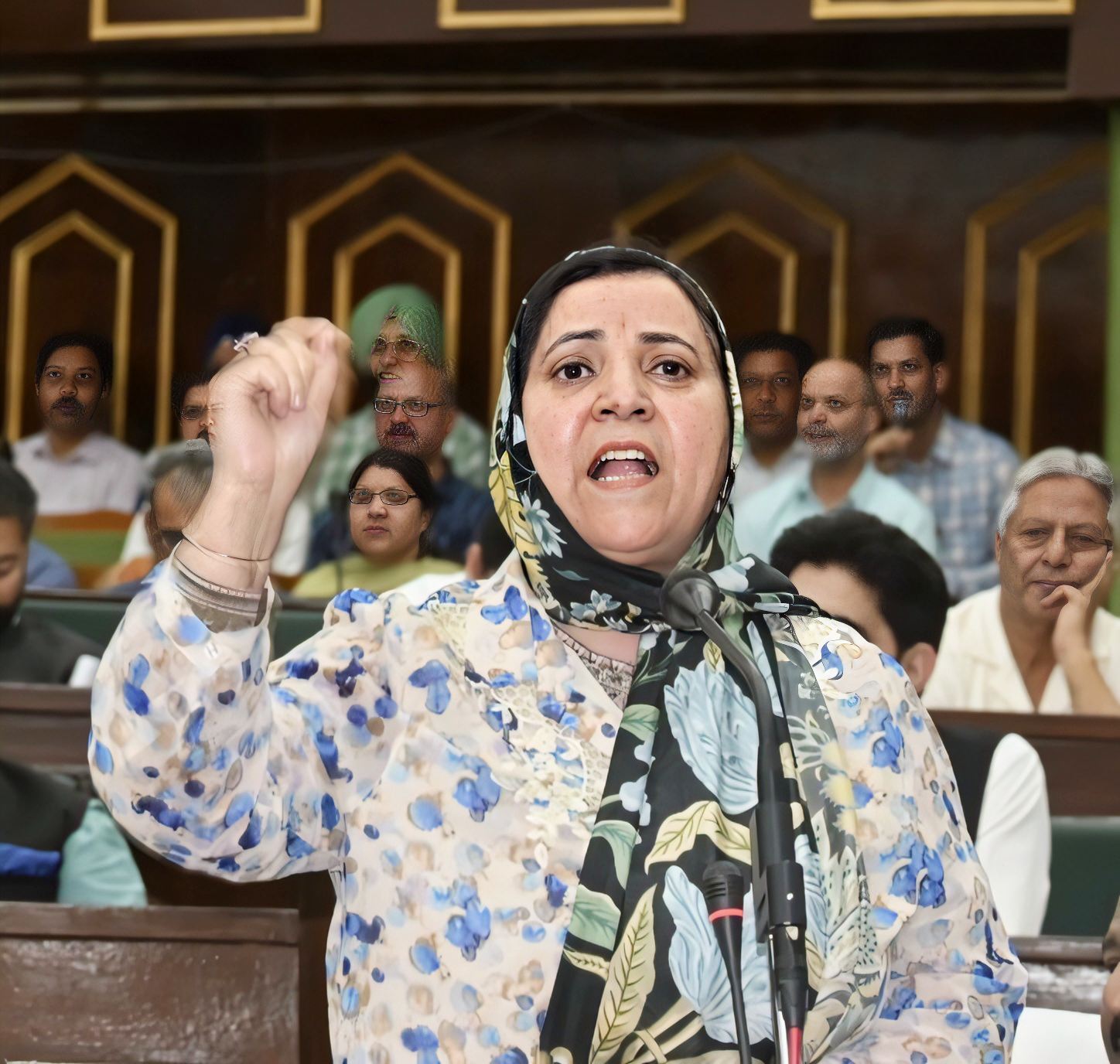
Speaking on behalf of Chief Minister Omar Abdullah, Minister for Health and Medical Education, Sakeena Itoo, responded to a Calling Attention Motion moved by MLA Sopore, Irfan Rasool Kar. The Minister acknowledged that Sopore’s low-lying topography makes it naturally susceptible to water accumulation during heavy rainfall, necessitating a multi-pronged engineering intervention to protect residential and commercial areas.
As part of the immediate relief strategy, the Minister informed the House that the Municipal Council Sopore has deployed five high-capacity dewatering pumps, with additional standby support from Fire and Emergency Services to tackle sudden inundation.
On the structural front, she detailed that the “Drainage Scheme Sopore” is currently under active execution with a sanctioned budget of ₹4.97 crore. Furthermore, a targeted deep-drainage project at Lane 06, Bagi Sana, Badam Bagh, costing ₹35 lakh, has already been successfully completed.
These initiatives are part of a broader commitment under the UT Capex (Drainage Sector) to reinforce the town’s resilience against extreme weather patterns.Looking toward a long-term solution, Minister Itoo revealed that the J&K Urban Environmental Engineering Department was formally engaged on March 25, 2026, to draft a comprehensive Detailed Project Report (DPR) for a town-wide drainage network.
In the interim, the Directorate of Urban Local Bodies, Kashmir, has released ₹6.40 lakh specifically for the desilting of existing channels. The Minister added that the PW (R&B) Division Sopore is currently finalizing cost estimates for a major desilting drive within urban limits, ensuring that the existing infrastructure operates at maximum capacity during the current financial year.