
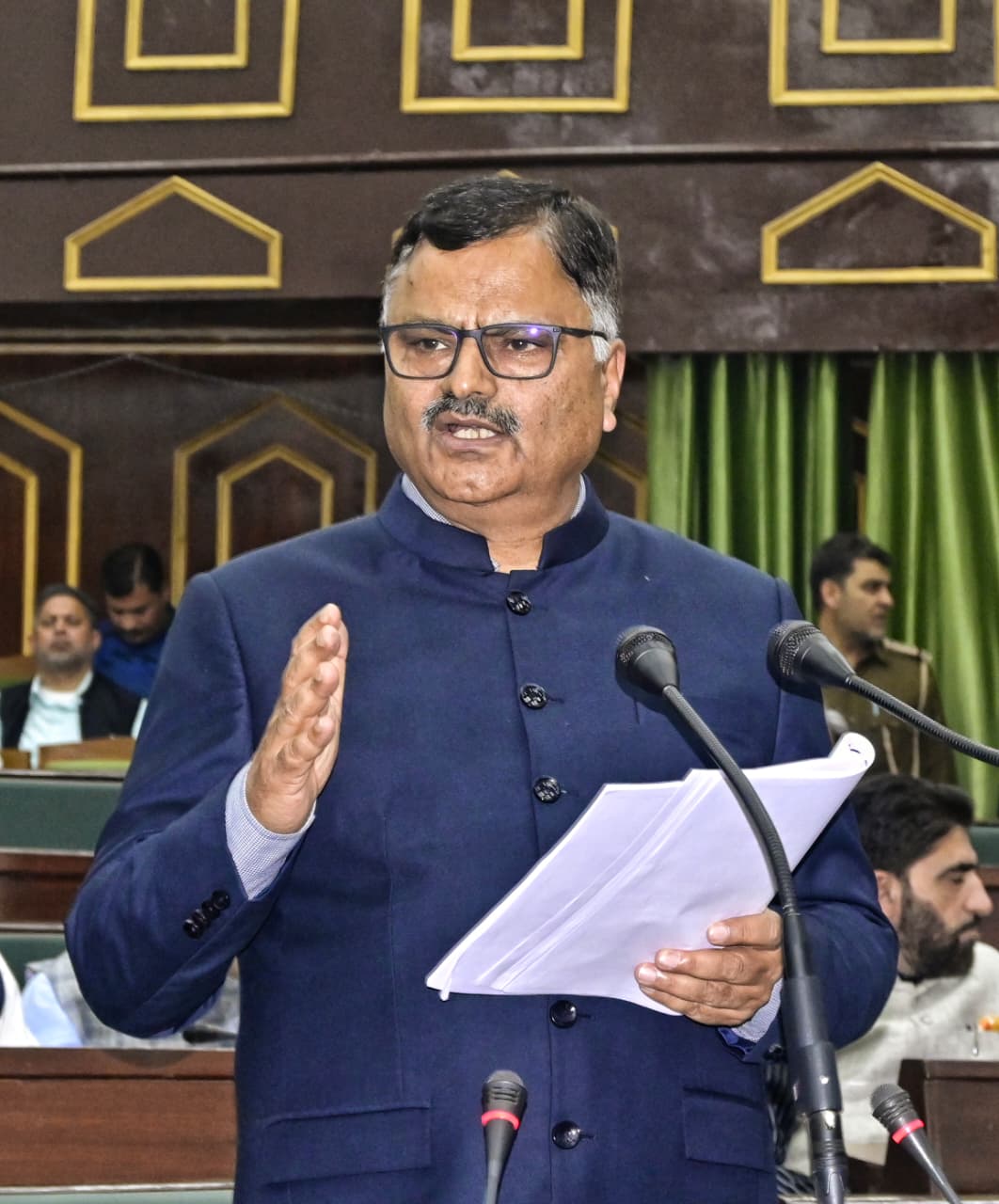
J&K Assembly Approves Major Budget Grants for Water Security, Forest Conservation, and Tribal Welfare
JAMMU, FEBRUARY 13, 2026 — In a landmark session of the Jammu and Kashmir Legislative Assembly, lawmakers today officially passed significant budgetary grants totaling over Rs. 6.77 lakh Lakh (approx. ₹6,778 crore) to bolster critical infrastructure and social welfare. The funds are earmarked for the Jal Shakti, Forest, Ecology & Environment, Irrigation & Flood Control, and Tribal Affairs departments. Following an intensive day-long debate, the grants were passed via voice vote, signaling a unified legislative push toward sustainable development and inclusive growth under the current administration.
Minister for Jal Shakti and Forest, Javed Ahmed Rana, outlined a vision for 2026–27 that balances rapid modernization with ecological preservation. A centerpiece of the environmental strategy includes the ambitious “Ek Ped Maa Ke Naam” initiative, which has already seen 71.77 lakh saplings planted, with a target to hit one crore by the end of the fiscal year and another crore planned for the following year. To combat climate change, the Minister noted that J&K remains carbon-positive, with significant reductions in PM10 pollutants—18.5% in Jammu and 41.3% in Srinagar—while the restoration of the Wular Lake Ramsar site continues to benefit thousands of local fishermen.
The Jal Shakti department received a substantial allocation to accelerate the Jal Jeevan Mission (JJM), which has already connected 15.64 lakh rural households to tap water. With the mission now extended to December 2028, the government has proposed a 10.4% increase in Capex to ₹1,561.9 crore. Key projects, including water supply lines for AIIMS Awantipora and AIIMS Vijaypur, are nearing completion. Additionally, the Irrigation and Flood Control sector saw a massive 62% hike in capital expenditure to ₹996 crore, aimed at bringing nearly 4 lakh hectares under assured irrigation and completing the vital Shahpur Kandi Dam and Tawi Barrage projects.
Focusing on social equity, the Tribal Affairs grants emphasize the “dignity-centric” development of the Gujjar, Bakerwal, and Pahari communities. The 2026–27 roadmap includes the construction of 26 new tribal hostels, the establishment of 1,000 Van Dhan Vikas Kendras, and the expansion of the Dharti Aaba Janjatiya Gram Utkarsh Abhiyan to 393 villages. To support migratory populations, seven transit accommodations are being finalized, while ₹3.77 crore has been set aside to operationalize Forest Rights Act (FRA) Cells across all districts, ensuring legal protections and land rights for indigenous groups are fast-tracked.