
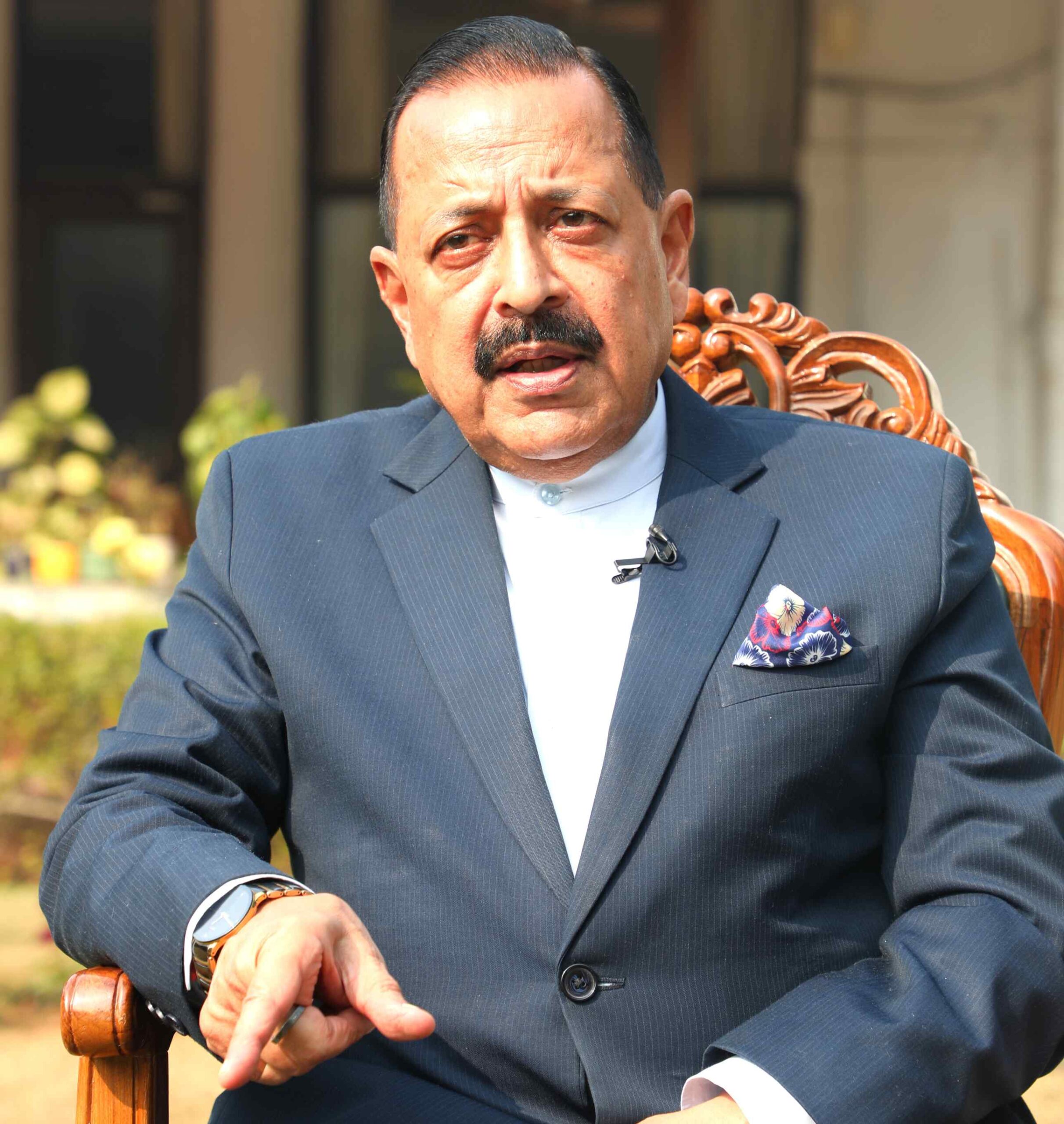
Jitendra Singh Hails SHANTI Bill as a Historic Leap for India’s Scientific and Nuclear Reforms
NEW DELHI, DECEMBER 28: Union Minister of Science and Technology, Jitendra Singh, has termed the SHANTI Bill as one of the most transformative reforms in the history of Indian science.
Speaking in a media interview today, Singh highlighted that the third term of Prime Minister Narendra Modi is defined by bold structural changes that place science, innovation, and entrepreneurship at the heart of national transformation. He emphasized that while previous reforms often focused on governance and public welfare, the SHANTI Bill marks a departure by linking the scientific economy directly to industry and business, effectively shaping India’s future socio-economic order.
A major highlight of the SHANTI Bill is its ability to break a six-decade stalemate in the nuclear sector. Singh noted that the legislation unlocks India’s potential for peaceful and sustainable clean energy while maintaining rigorous safety standards. Historically, India’s nuclear program—envisioned by Homi Bhabha for development and healthcare—faced policy barriers that prevented large-scale civilian expansion.
The Minister stated that the new bill dismantles these legacy taboos, paving the way for nuclear energy to meet nearly 10 percent of the nation’s electricity requirements as India moves toward its Net Zero commitments.The Minister also shared impressive growth figures, noting that India’s nuclear power capacity has nearly doubled from 4.4 GW in 2014 to approximately 8.7 GW today.
With a strategic roadmap aiming for 100 GW by 2047, the government is also exploring Small Modular Reactors (SMRs) to power industrial corridors and urban clusters. Beyond energy, Singh pointed to the vital role of nuclear science in healthcare, particularly in cancer treatment and nuclear medicine. The SHANTI Bill has received widespread acclaim from the scientific community and startups, signaling a national consensus on modernizing the nuclear sector to drive India toward becoming a developed nation by 2047.