
Climate-Smart Cities: IMD to Deploy 200 Advanced Weather Stations Across Four Major Metros in 2026
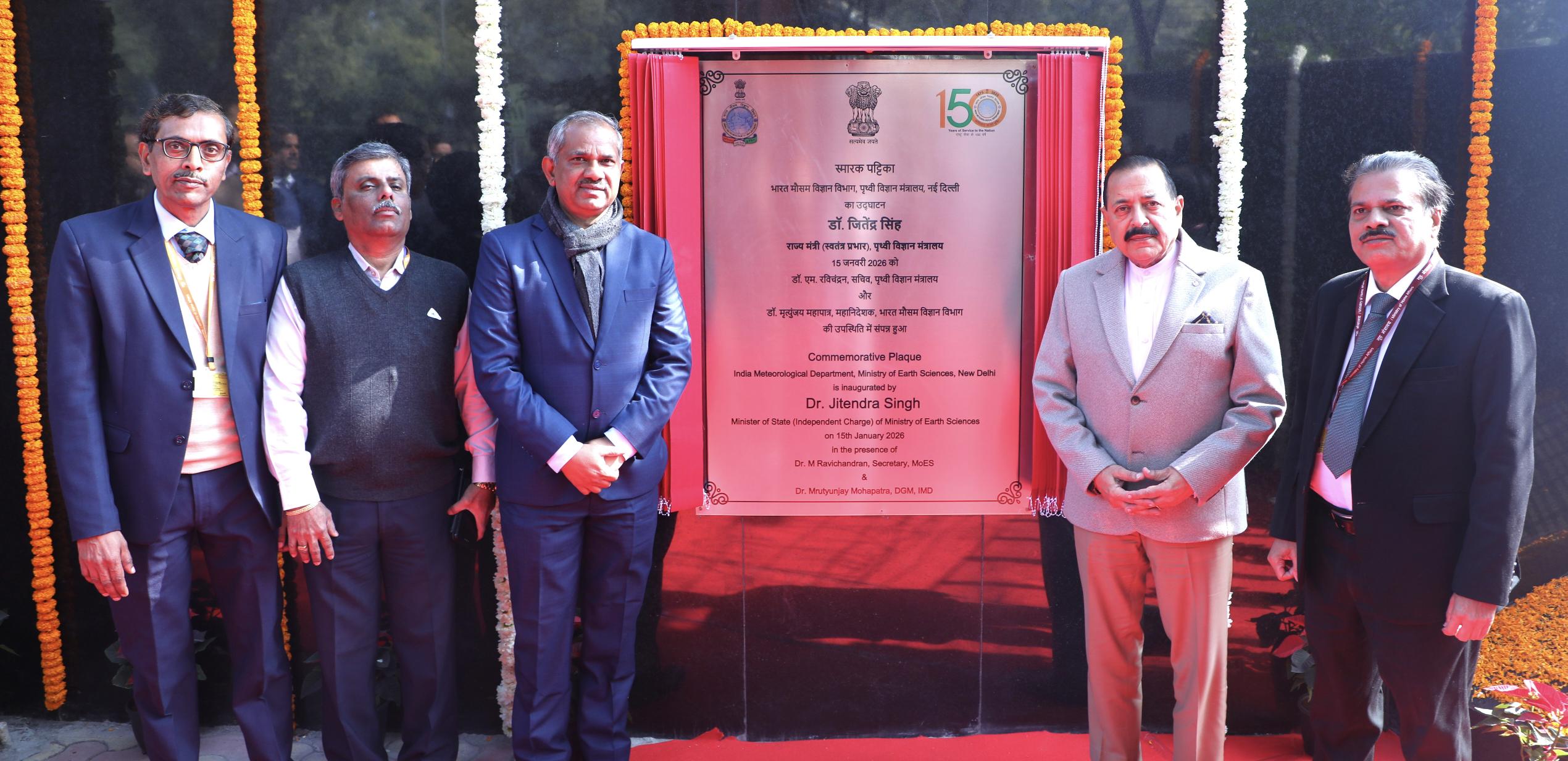
NEW DELHI | JAN 15, 2026 :- In a landmark move to fortify India’s urban centers against the increasing unpredictability of climate change, Union Minister Dr. Jitendra Singh announced a massive infrastructure expansion during the 151st Foundation Day of the India Meteorological Department (IMD). The centerpiece of this initiative is the deployment of 200 high-tech Automatic Weather Stations (AWS) throughout 2026, with 50 units specifically allocated to each of the four major hubs: Delhi, Mumbai, Chennai, and Pune. This strategic rollout aims to transition from general regional forecasts to “hyper-local” monitoring, providing the granular data necessary to predict sudden urban phenomena like flash floods, extreme heatwaves, and localized thunderstorms with unprecedented precision.
Dr. Singh emphasized that this expansion is a cornerstone of the government’s “Mission Mausam,” an ambitious vision led by Prime Minister Narendra Modi to integrate advanced meteorological science into public safety and urban planning. The Minister highlighted a remarkable leap in technological efficiency, noting that IMD’s forecast accuracy has surged by 40–50% over the last decade. Furthermore, cyclone track predictions have seen a 40% improvement, while seasonal forecast errors have plummeted from 7.5% to a mere 2.5%. These gains are attributed to a tripling of weather radars—now covering 87% of India’s landmass—and a shift toward indigenous, cost-effective technologies like 3D-printed weather stations and agro-automated systems.
Beyond domestic borders, the Minister positioned India as a regional “big brother” in disaster management, providing critical satellite-based weather data to neighbors including Bangladesh, Nepal, Bhutan, and Sri Lanka. To sustain this momentum, the government plans to establish new Centres of Excellence and additional Regional Meteorological Centres to decentralize expertise and enhance reach. As the IMD enters its 152nd year, the integration of solar-powered headquarters and ultra-short-range forecasting (predicting weather windows as small as three hours) underscores a future-ready department committed to building a climate-resilient “Viksit Bharat.”