
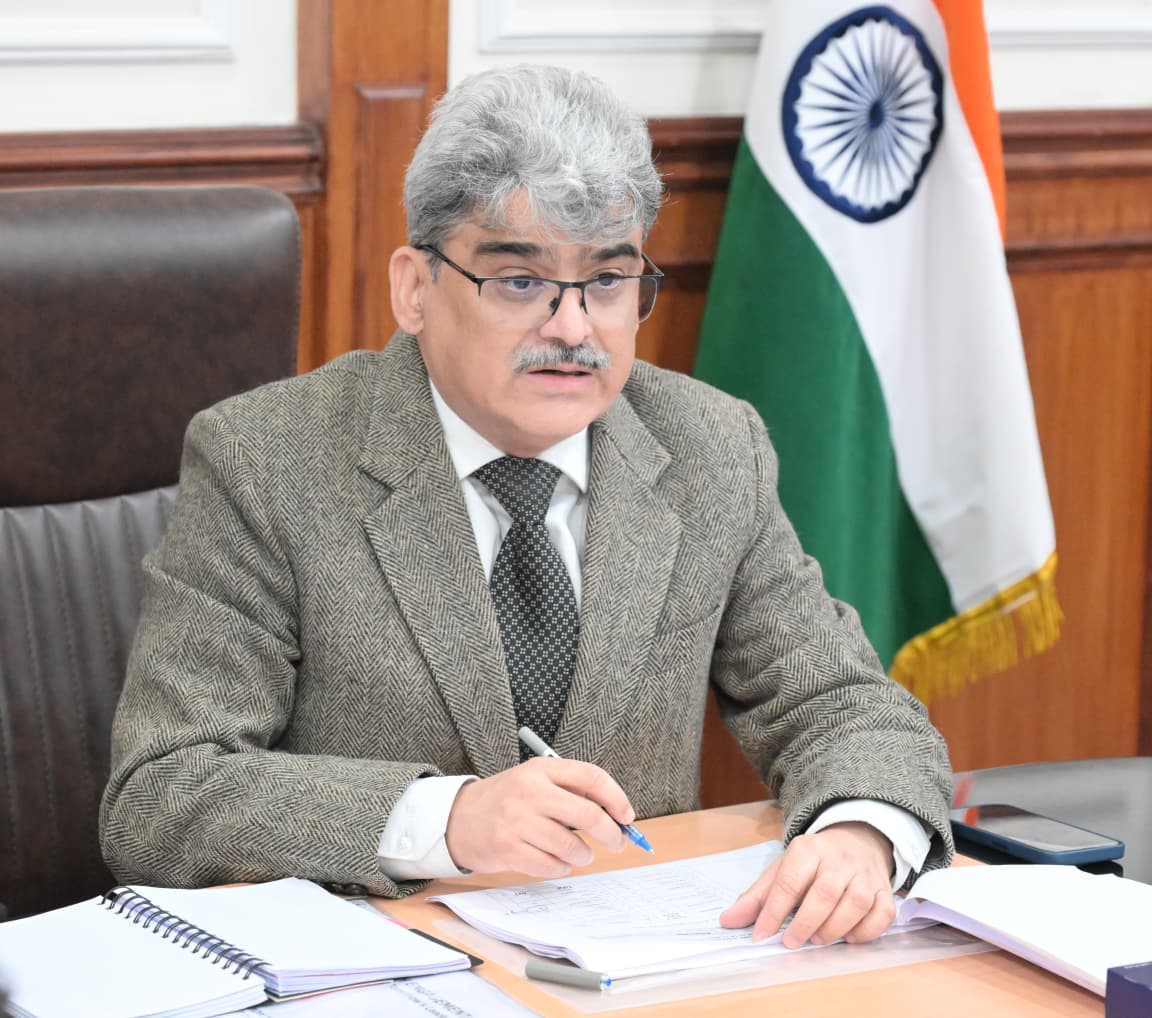
Chief Secretary Atal Dulloo Reviews Comprehensive Healthcare Reforms to Transform J&K Medical Landscape
JAMMU, March 26, 2026 — Chief Secretary Atal Dulloo chaired a high-level meeting on Thursday to assess the implementation of transformative healthcare reforms in Jammu and Kashmir, structured under the guidance of NITI Aayog.
The session focused on an integrated strategy to overhaul the Union Territory’s medical infrastructure through technology infusion, institutional collaboration, and robust capacity building.
Emphasizing the need for a patient-centric system, the Chief Secretary reviewed the progress of the Health & Medical Education (H&ME) Department in securing additional MBBS and postgraduate seats, urging medical college principals to further expand educational capacity to meet the region’s growing demands.
A central pillar of the reform roadmap includes the immediate operationalization of Tele-ICU and Tele-Radiology services. Utilizing a “hub-and-spoke” model anchored in Government Medical Colleges, these digital initiatives—already vetted by NITI Aayog—aim to bridge critical care gaps across remote areas.
To further specialize care, the UT is establishing a comprehensive cancer strategy in coordination with the ICMR, which includes molecular oncology centers and a population-based cancer registry.
Additionally, plans are underway to launch advanced hepatology and liver transplant services in collaboration with the Institute of Liver and Biliary Sciences, ensuring high-end tertiary care is available locally within J&K.Beyond clinical upgrades, the meeting highlighted several community-focused health initiatives and regulatory enhancements.
The “Circle of Care” model for mental health and drug de-addiction has already seen the training of over 900 counselors to combat substance abuse at the grassroots level. Meanwhile, the Food Safety and Standards Authority of India (FSSAI) is collaborating with the UT to strengthen enforcement mechanisms ahead of the peak tourism season.
Commissioner Secretary M. Raju noted that these multi-sectoral reforms—ranging from mobile dental units to digital supply chain management via the DVDMS platform—are designed to ensure that quality healthcare remains accessible, affordable, and equitable for all citizens of Jammu and Kashmir.