
Chief Minister Omar Abdullah Unveils Strategic Plan for Heritage Preservation and Cultural Tourism in J&K
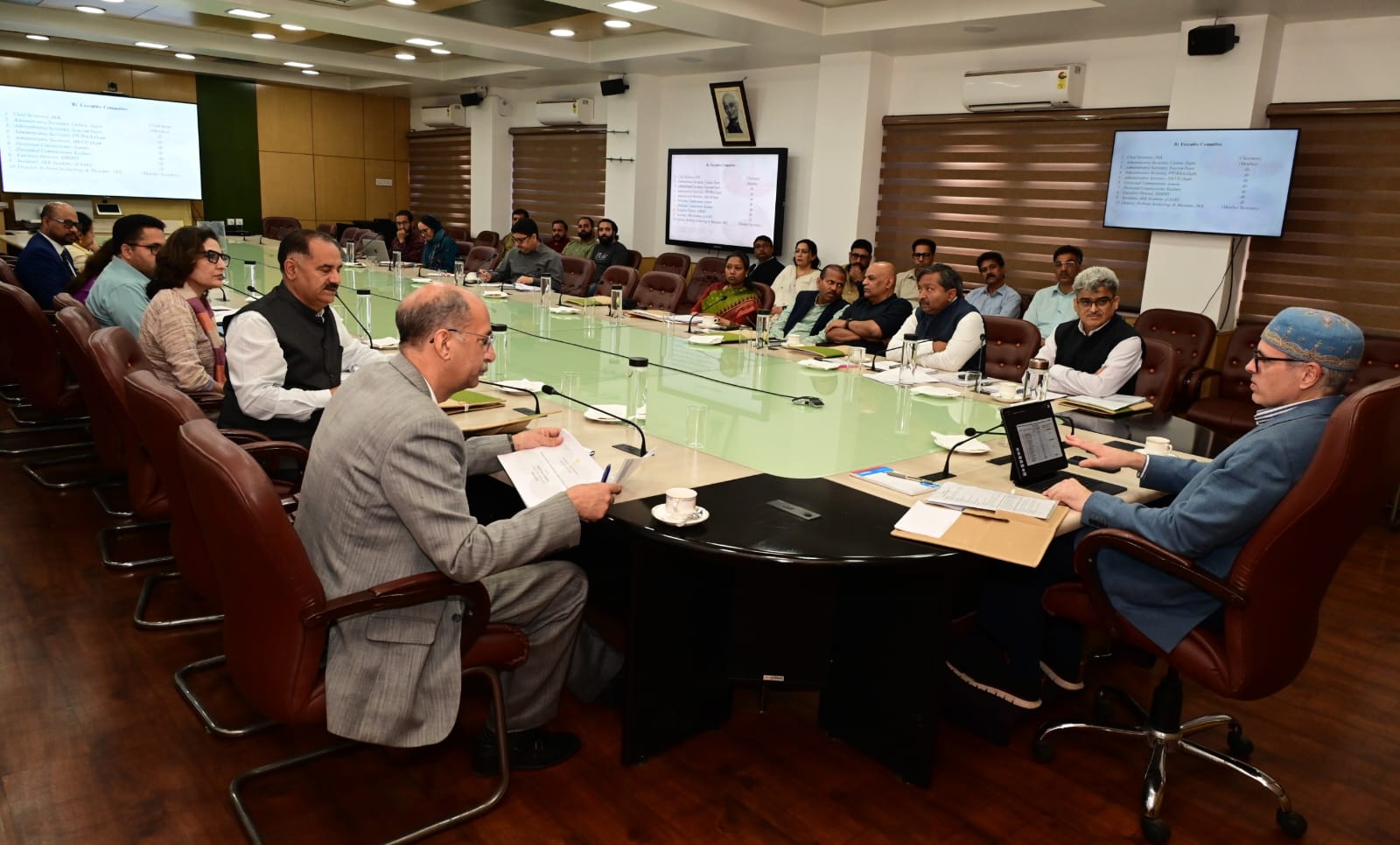
JAMMU, April 8, 2026*— Chief Minister Omar Abdullah chaired a high-level meeting today focused on Heritage Promotion and Cultural Tourism, outlining a comprehensive strategy to conserve Jammu & Kashmir’s historical assets through adaptive reuse.
Emphasizing the need to transform heritage sites into viable tourism engines, the Chief Minister called for the strengthening of institutional mechanisms and the development of specialized heritage circuits.
He underscored the importance of collaborating with national and international experts to gain technical insights, ensuring that J&K’s vast cultural wealth—comprising over 600 identified sites—is leveraged for economic growth without compromising its historical integrity.
The meeting was attended by Advisor Nasir Aslam Wani, Chief Secretary Atal Dulloo, Additional Chief Secretary Dheeraj Gupta, and other senior officials from the Tourism, Information, and Culture departments.
A central theme of the discussion was the adoption of Public-Private Partnership (PPP) models for the adaptive reuse of neglected structures, drawing inspiration from successful transformations in states like Punjab, Rajasthan, and Madhya Pradesh.
Citing landmarks such as Qila Mubarak and Neemrana Fort, the Chief Minister advocated for a shift toward “commercialization with conservation,” where heritage hotels and museums can generate sustainable revenue.
The session addressed existing gaps in the J&K Heritage Conservation and Preservation Act of 2010, specifically noting the inactive status of the Heritage Conservation Authority and the lack of inter-departmental coordination.
To resolve these issues, a reform proposal was presented to reconstitute the Authority under the direct leadership of the Chief Minister, granting it expanded powers to implement more effective conservation policies.
The presentation by the Secretary of Culture highlighted the immense potential of both tangible monuments and intangible traditions, such as performing arts and shrines, which currently face deterioration due to inadequate funding and technical expertise.
To bridge these gaps, the new strategy proposes integrated planning and strategic branding to position Jammu & Kashmir as a premier destination for cultural tourism and destination weddings.
By focusing on heritage tourism circuits and the development of heritage hotels via PPP modes, the administration aims to revitalize underutilized sites.
This forward-looking approach seeks to create a dynamic ecosystem where community engagement and professional preservation work in tandem to safeguard J&K’s legacy for future generations.