
Unified Lending Interface to Revolutionize Credit Access in Jammu & Kashmir and Ladakh
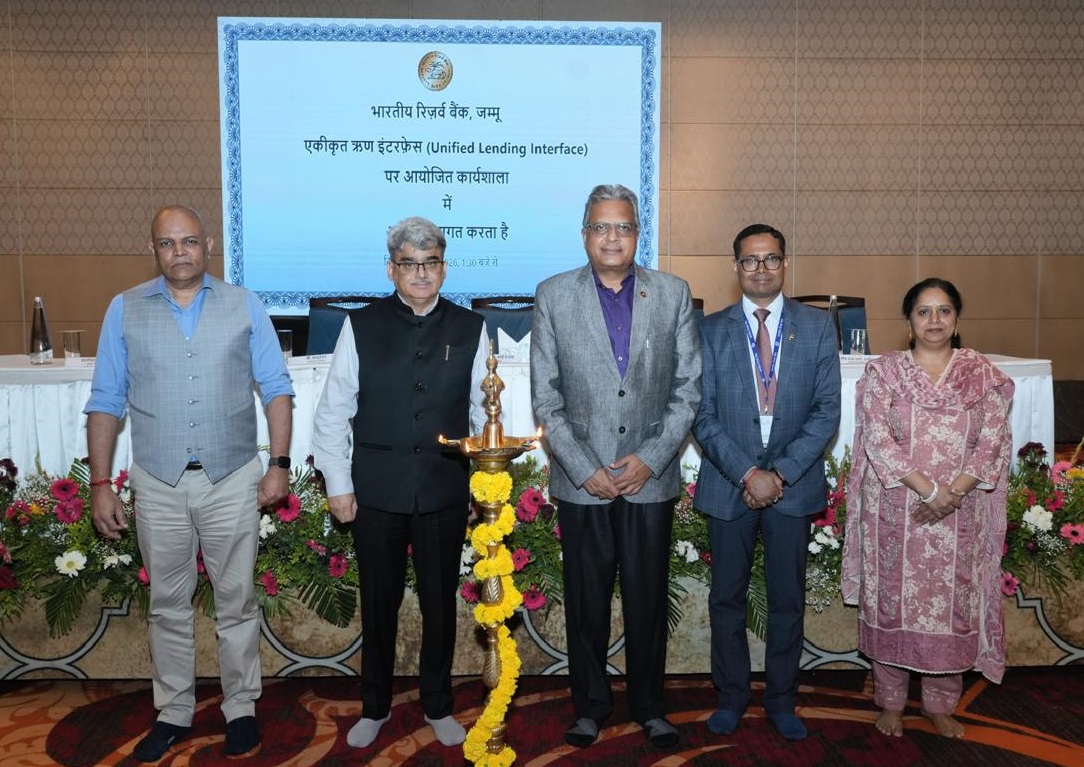
JAMMU, April 7, 2026 — In a major move to modernize the financial landscape, the Reserve Bank of India (RBI) Jammu hosted a specialized workshop on the Unified Lending Interface (ULI) , a platform set to transform the lending ecosystem across the Union Territories.
Chief Secretary Atal Dulloo, attending as the Chief Guest alongside RBI Mumbai Executive Director P. Vasudevan and Regional Director Chandrashekhar Azad, hailed the initiative as a “transformative step” toward democratizing credit. The platform is designed to slash loan processing times from several weeks to just a few minutes by integrating technology-driven data, making it particularly vital for the hilly and geographically challenging terrains of Jammu, Kashmir, and Ladakh.
The workshop, which saw participation from senior officials including Financial Commissioner Ashish Chandra Verma and Commissioner Secretary Mandeep Kaur, emphasized shifting the banking paradigm from collateral-based to data-driven lending. Chief Secretary Dulloo noted that ULI’s plug-and-play architecture would bridge credit gaps for MSMEs, farmers, and artisans by utilizing verified digital footprints instead of heavy physical documentation.
By eliminating fragmentation across data systems, the interoperable platform is expected to lower operational costs and invite greater participation from fintech companies, ensuring that even the most remote entrepreneurs can access financial resources with unprecedented transparency and speed.Comparing the launch to a “UPI moment” for the credit sector, Regional Director Chandrashekhar Azad and Executive Director P. Vasudevan highlighted that ULI provides a secure, consent-based framework for seamless credit delivery.
While acknowledging that many rural borrowers remain underserved due to a lack of digital records, the RBI officials encouraged the government to integrate state datasets through APIs to further strengthen financial inclusion.
The session concluded with a call to action for all stakeholders to ensure the benefits of this digital revolution reach the “last mile,” empowering the traditional craft and agricultural sectors to drive regional economic growth.