
Total Lunar Eclipse March 2026: City-Wise Moonrise Timings and Full Visibility Guide for India
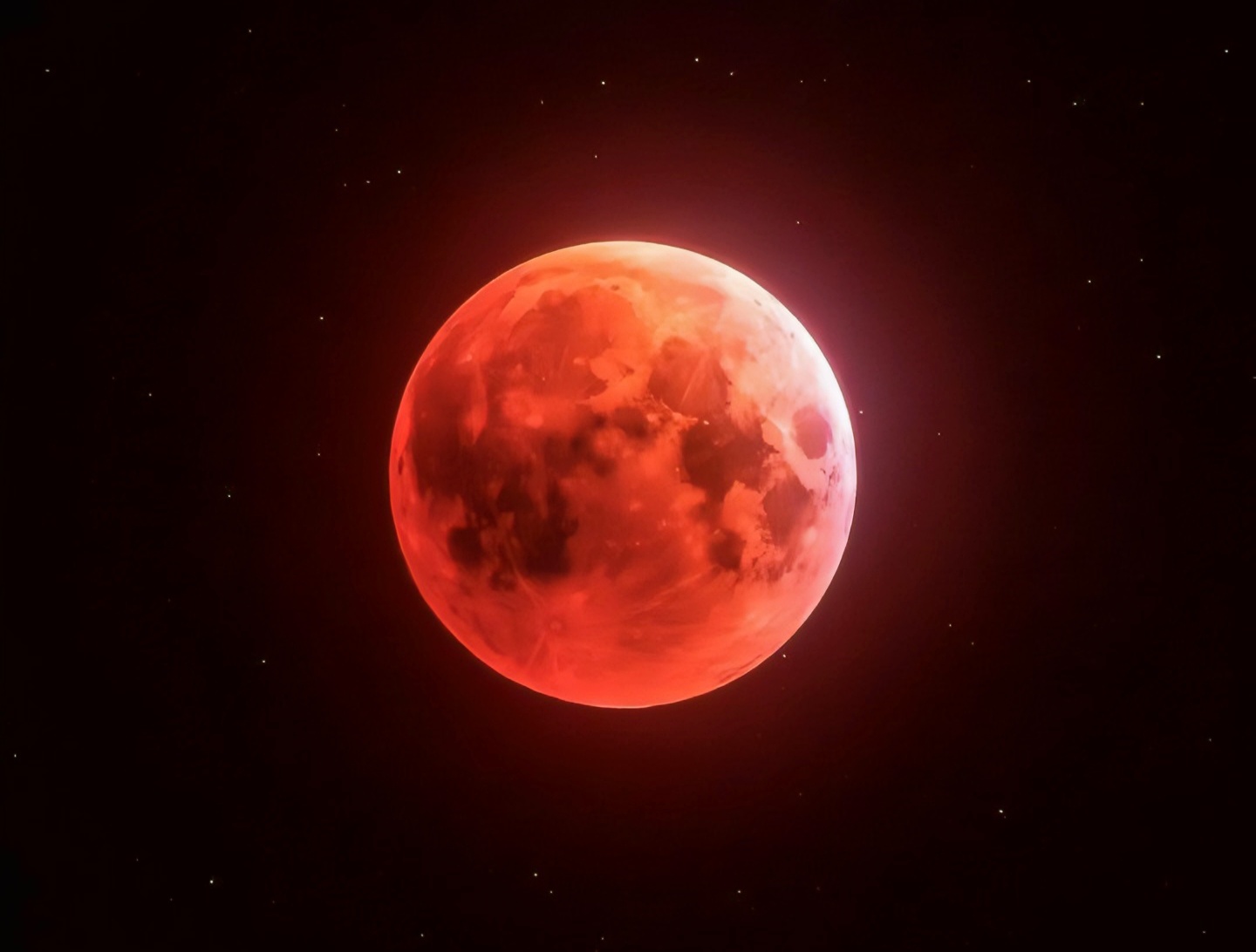
New Delhi Feb 26 :- Astronomy enthusiasts across India are preparing for a spectacular celestial event as a Total Lunar Eclipse is set to occur on Tuesday, March 3, 2026 (12 Phalguna, 1947 Saka Era). This rare phenomenon, where the Earth aligns perfectly between the Sun and the Moon, will be visible from most parts of the country, though the exact duration of visibility depends heavily on local moonrise times. Globally, the eclipse will span eastern Asia, Australia, the Pacific Ocean, and the Americas. In India, the umbral phase begins at 15:20 IST and ends at 18:48 IST, with the peak totality phase—where the moon takes on a reddish hue—lasting from 16:34 IST to 17:33 IST. While much of the country will see the eclipse concluding as the moon rises, residents in North-East India and the Andaman and Nicobar Islands will be treated to a view of the end of the totality phase.
For those planning to watch the skies, the duration of the eclipse visible from your location is calculated from the time of moonrise until the end of the umbral phase at 18:48 IST. In the North-East, Dibrugarh (17:09), Kohima (17:13), Imphal (17:15), Itanagar (17:15), and Tamelong (17:15) will have the longest viewing windows, exceeding 1.5 hours. Other major cities in the eastern belt like Aizawl (17:20), Shillong (17:23), Guwahati (17:24), Agartala (17:27), Port Blair (17:27), Cooch Behar (17:33), Gangtok (17:36), Darjeeling (17:37), Siliguri (17:37), Murshidabad (17:38), Kolkata (17:39), Bhagalpur (17:44), and Midnapore (17:44) will all enjoy over an hour of visibility.
As the moonrise moves westward, the viewing window narrows. Cities such as Cuttack (17:50), Muzaffarpur (17:50), Patna (17:51), Bhubaneswar (17:51), Hazaribagh (17:51), Puri (17:51), Ranchi (17:51), Gaya (17:52), Sambalpur (17:58), Varanasi (18:00), Koraput (18:04), Allahabad (18:05), Lucknow (18:07), Raipur (18:07), and Rajamundry (18:07) will see the eclipse for roughly 40 to 60 minutes. Moving into central and southern India, visibility continues for Vijayawada (18:14), Nowgong (18:15), Chennai (18:17), Dehradun (18:17), Haridwar (18:17), Nagpur (18:18), Nellore (18:18), Chandigarh (18:19), Kavalur (18:19), Nalgonda (18:19), Pondicherry (18:19), Srinagar (18:28), Jammu (18:29), Shimla (18:21), Delhi (18:22), Hyderabad (18:22), Thanjavur (18:23), Bhopal (18:24), and Jalandhar (18:25).
In the western and southernmost regions, the celestial show will be brief. Residents in Madurai (18:27), Amritsar (18:30), Bangalore (18:28), Jaipur (18:29), Kanyakumari (18:31), Ujjain (18:31), Mysore (18:32), Thiruvananthapuram (18:33), Ajmer (18:34), Trichur (18:34), Cochin (18:35), Hubli (18:36), Kozikode (18:36), Sringeri (18:36), Cannanore (18:38), Mangalore (18:39), Udaipur (18:39), Kolhapur (18:40), Panaji (18:40), Nasik (18:41), Pune (18:41), Vadodara (18:42), Mount Abu (18:43), Ahmadabad (18:44), Gandhinagar (18:44), Silvassa (18:44), and Mumbai (18:45) will have between 3 to 20 minutes to catch the final sliver of the Earth’s shadow. Unfortunately, the eclipse will not be visible in Dwarka, Kavaratti, and Rajkot as the moon rises after the phenomenon has ended. This marks the last total lunar eclipse visible from India until September 2025, with the next major lunar event being a partial eclipse on July 6, 2028.